
Understanding the Core Scope of Electrical Maintenance
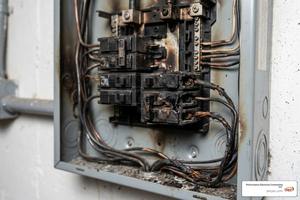
The broad discipline of electrical maintenance centers on keeping facility infrastructure performing safely and efficiently. Systems deteriorate over decades of operational service—for example, low-voltage switchgear is typically engineered for a 20-year or longer operational lifespan. Without active intervention, thermal oxidation, vibration, harmonic loading, and insulation breakdown eventually trigger unexpected system failure or catastrophic fires.
Modern preventive electrical maintenance uses non-invasive diagnostic tools alongside periodic physical servicing. Incorporating thermal imaging allows qualified technicians to inspect concealed electrical infrastructure inside walls and panels without causing structural damage. Infrared thermography pinpoints loose terminal connections, phase imbalances, and overheated components long before a circuit breaker trips or equipment burns out.
Along with thermal checks, continuous power quality monitoring identifies voltage sags, transient surges, and harmonic distortions that degrade modern electronics. Addressing these early keeps equipment running longer, protects electronic controls, lowers energy consumption, and mitigates expensive downtime. Recognizing the 5 Warning Signs Your Commercial Electrical System Needs Immediate Attention helps facility teams take action before small component defects become major outages.
Essential Systems and Equipment Covered
A thorough technical maintenance program prepares students to work across a wide array of high-value equipment:
- Transformers: Testing dielectric fluid, checking liquid levels, inspecting bushings, and verifying winding resistance and turns ratios.
- Low-Voltage Switchgear: Inspecting bus bars, testing circuit breaker trip mechanisms, and verifying mechanical alignment. Industry frameworks like the IEC Low-Voltage Switchgear Technical Report emphasize transitioning switchgear maintenance from fixed calendar schedules to sensor-driven condition monitoring to improve lifetime efficiency.
- Motor Control Centers (MCCs), PLCs, and VFDs: Testing motor overload protection, inspecting starter contacts, programming Programmable Logic Controllers, and adjusting Variable Frequency Drive parameter settings for optimal process automation.
- Backup Engine-Generators and Battery Banks: Checking starting battery charge levels, testing automatic transfer switches, verifying fuel quality, and performing regular load-bank testing to guarantee emergency backup power.
Electrical Maintenance Safety Regulations and Standards
Safety is the absolute cornerstone of electrical maintenance. Safe work practices prevent fatal shocks, arc flash burns, and unexpected machinery starts.
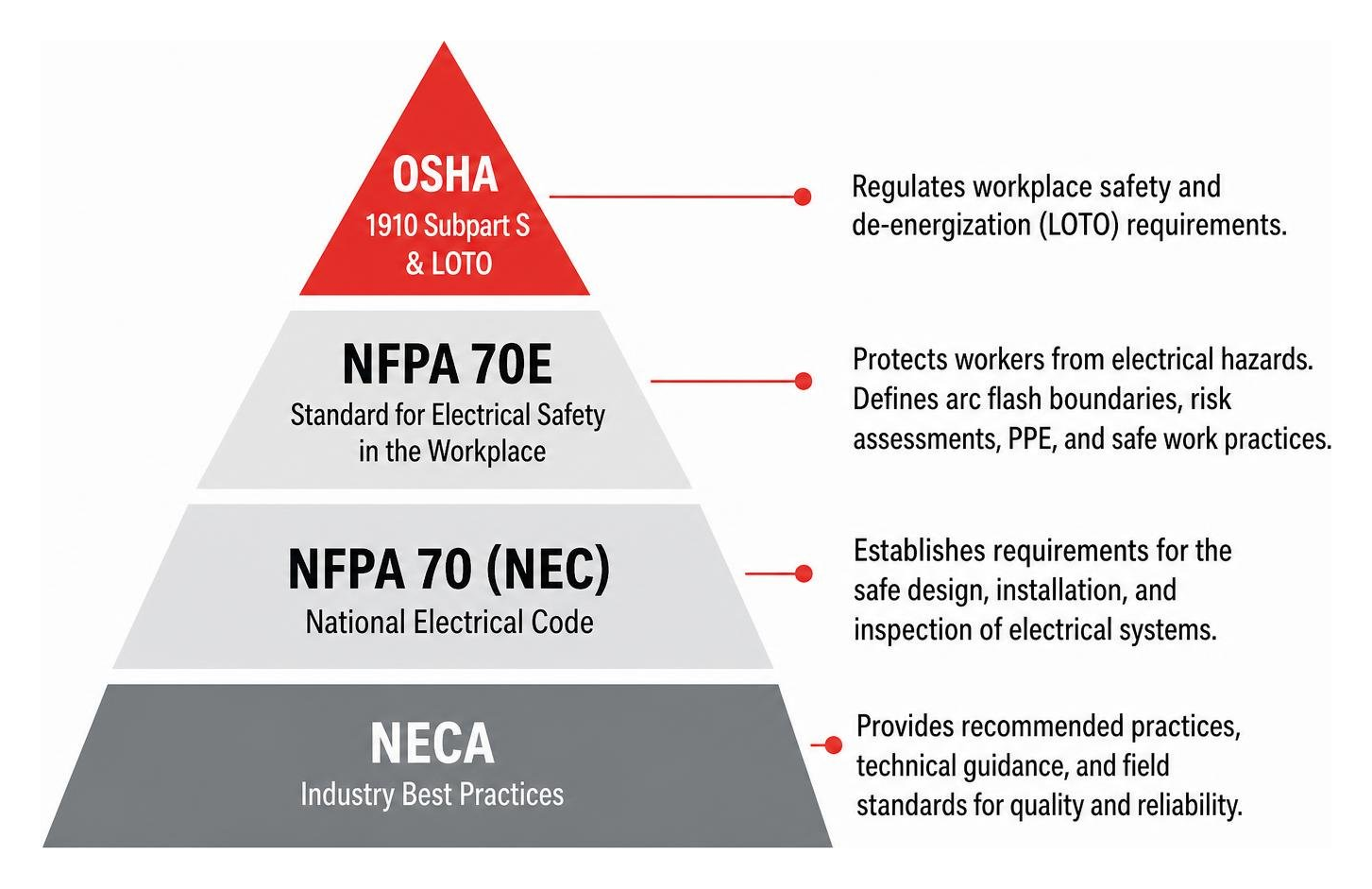
Essential safety frameworks and regulatory mandates include:
- OSHA 1910 Subpart S & Lock-out/Tag-out (LOTO): Regulates workplace safety and strict de-energization protocols. Multi-lock LOTO devices capable of holding up to six padlocks simultaneously, paired with out-of-order tags, ensure circuits remain isolated while personnel perform repairs.
- NFPA 70E (Standard for Electrical Safety in the Workplace): Establishes arc flash boundary requirements, energized work permits, and Personal Protective Equipment (PPE) selection based on incident energy calculations. NFPA 70E requires arc flash risk assessments to be updated at least every five years or whenever major system modifications occur. Any equipment operating at 50 Volts or higher requires clear arc flash hazard labeling.
- National Electrical Code (NFPA 70 / NEC): The foundational design and installation code, updated every three years to keep pace with evolving industry practices and technologies.
- NECA 91-2023: The NECA 91-2023 Standard for Maintaining Electrical Equipment provides clear guidelines for maintaining, testing, and reconditioning commercial building systems to ensure safe and compliant operations.
Key Evaluation Criteria for Electrical Maintenance Training Programs
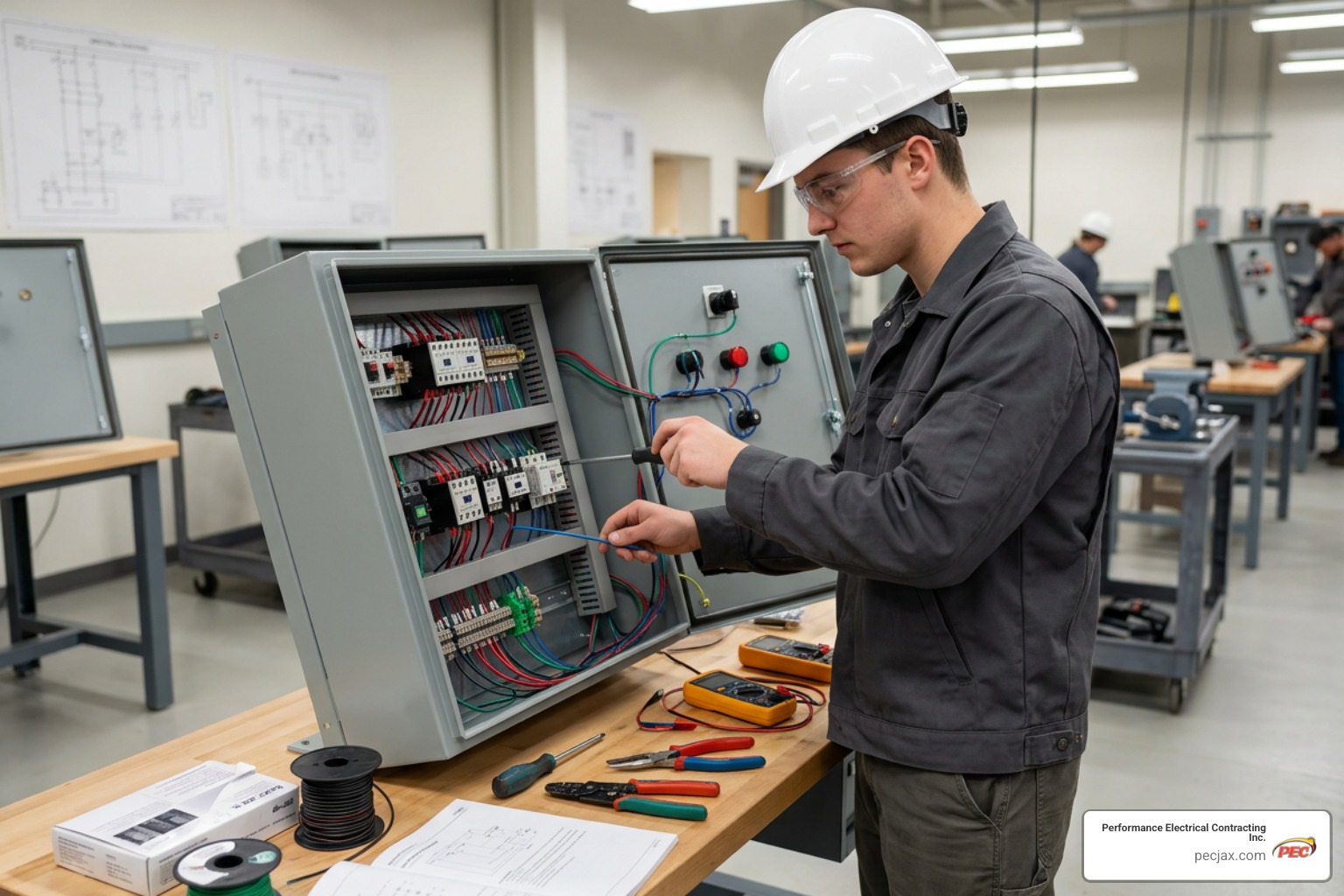
When evaluating educational programs, look for a balanced curriculum that combines classroom electrical theory with hands-on technical labs.
Program options range from short vocational training credentials up to two-year associate degrees requiring 121 to 139 program credits. Tuition costs vary significantly by institution and scope—for example, full mechatronics programs can run roughly $7,700 to over $15,000 depending on residency and course hours.
Key technical skills taught in comprehensive programs include:
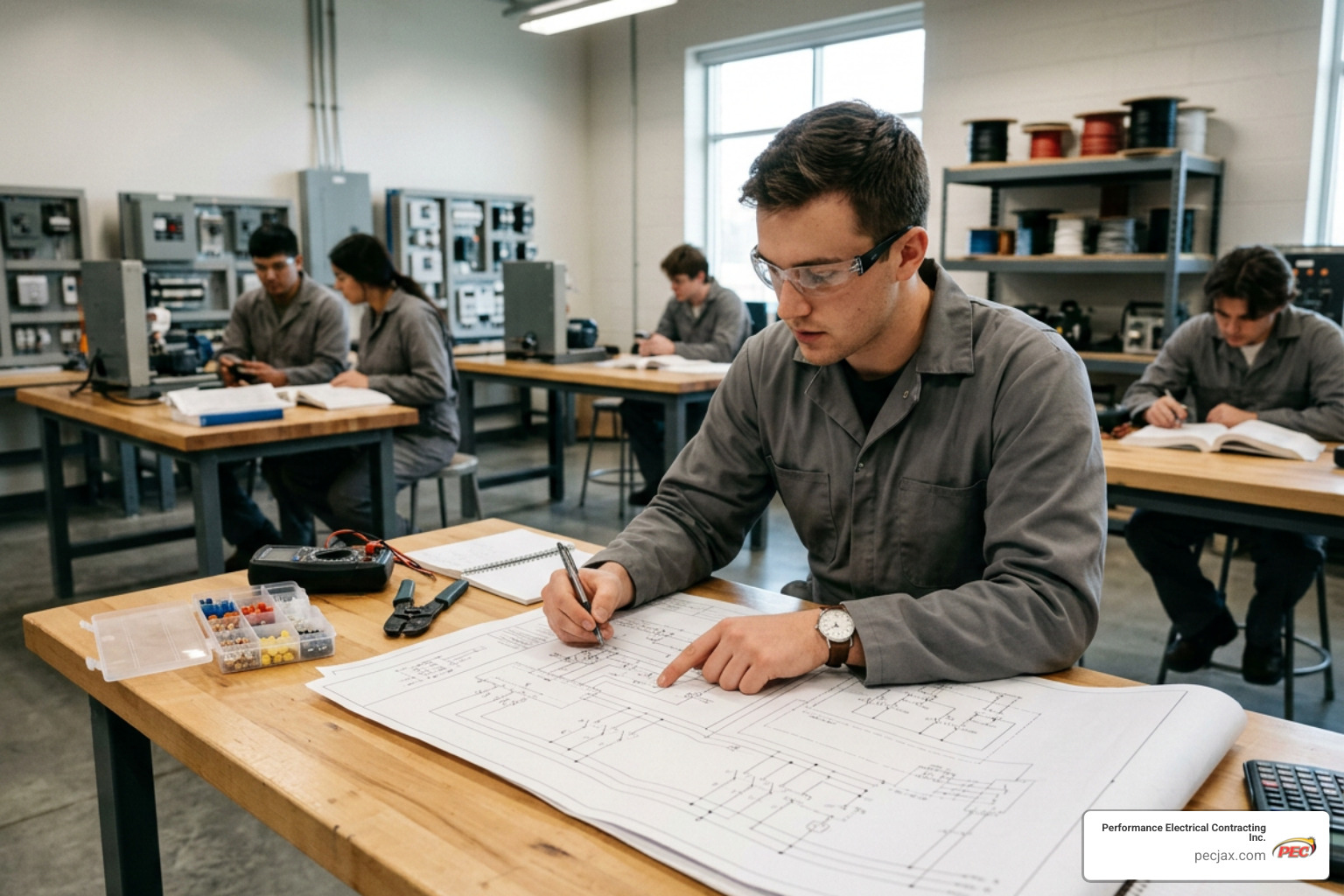
- Reading complex electrical single-line diagrams, schematics, and control blueprints.
- Calculating precise conduit bends using trigonometric principles.
- Installing, testing, and troubleshooting AC and DC motor control circuits.
- Measuring voltage, current, resistance, and signal continuity using digital multimeters.
- Programming PLCs and configuring VFD parameters for automation systems.
- Testing fluid power systems, including hydraulics and pneumatics integrated into electro-mechanical equipment.
Curriculum Depth, Certifications, and Hands-On Simulation
Look for programs that combine physical lab work with advanced technical certifications. Entry-level technicians benefit from earning an OSHA-10 card for foundational jobsite safety and EPA Section 608 certification for handling refrigerants in commercial cooling equipment.
Modern training increasingly incorporates 3D simulation software and gamified interactive troubleshooting challenges. Virtual learning tools—such as simulated power outage scenarios and 3D motor exploration—allow students to safely practice high-risk diagnostic procedures and fault finding before working in live physical environments.
Building strong practical skills helps technicians identify household and commercial safety issues, such as knowing How to Tell When Your Home Needs an Electrical Safety Inspection.
Program Accreditation and Technical Standards Alignment
High-quality programs align their technical instruction with National Electrical Installation Standards (NEIS), NETA testing guidelines, and Reliability-Centered Maintenance (RCM) principles.
Students should learn proper procedures for accessing confined spaces, such as underground utility manholes and vault structures, following strict atmospheric testing and entry protocols. Understanding high-voltage servicing rules is also essential. Operational manuals such as the MS-28 Electrical Switchgear Maintenance Manual emphasize that work on high-voltage equipment operating at or above 600V AC requires strict safety protocols, specialized contractor expertise, and two-person verification before de-energized work can begin.
Comparing Technical Credentials, Costs, and Career Pathways

Choosing between educational paths depends on your career goals, budget, and desired time frame:
| Program Type | Typical Duration | Clock Hours / Credits | Focus Areas | Best For |
|---|---|---|---|---|
| Vocational Certificate / Diploma | 12 to 20 Months | 800 to 2,160 Hours | Practical wiring, motor controls, fluid power, PLCs, basic electronics | Quick entry into industrial maintenance and electrician helper roles |
| Associate in Applied Science (AAS) | 2 Years (6–7 Quarters) | 121 to 139 Credits | Advanced automation, electrical math, trigonometric conduit bending, VFDs, robotics | Broader career mobility, utility engineering, and system programming roles |
Certificate vs. Degree Pathways in Electrical Maintenance
A 20-month industrial maintenance or mechatronics diploma provides direct, intensive hands-on training tailored for immediate factory floor or commercial facility employment. In contrast, a 7-quarter AAS degree includes higher-level mathematics, electrical theory, and automation programming, preparing graduates to manage complex building automation systems.
Both educational paths give technicians the skills to follow formal audit protocols, such as those outlined in the Vertiv Electrical Maintenance Audit Checklist. This includes updating single-line diagrams, performing root-cause analyses of equipment trips, and tracking power trends to prevent costly downtime.
On-the-Job Apprenticeship vs. Technical School Training
Apprenticeships provide paid, supervised on-the-job experience paired with classroom instruction under a licensed Class A Master or Journeyworker Electrician.
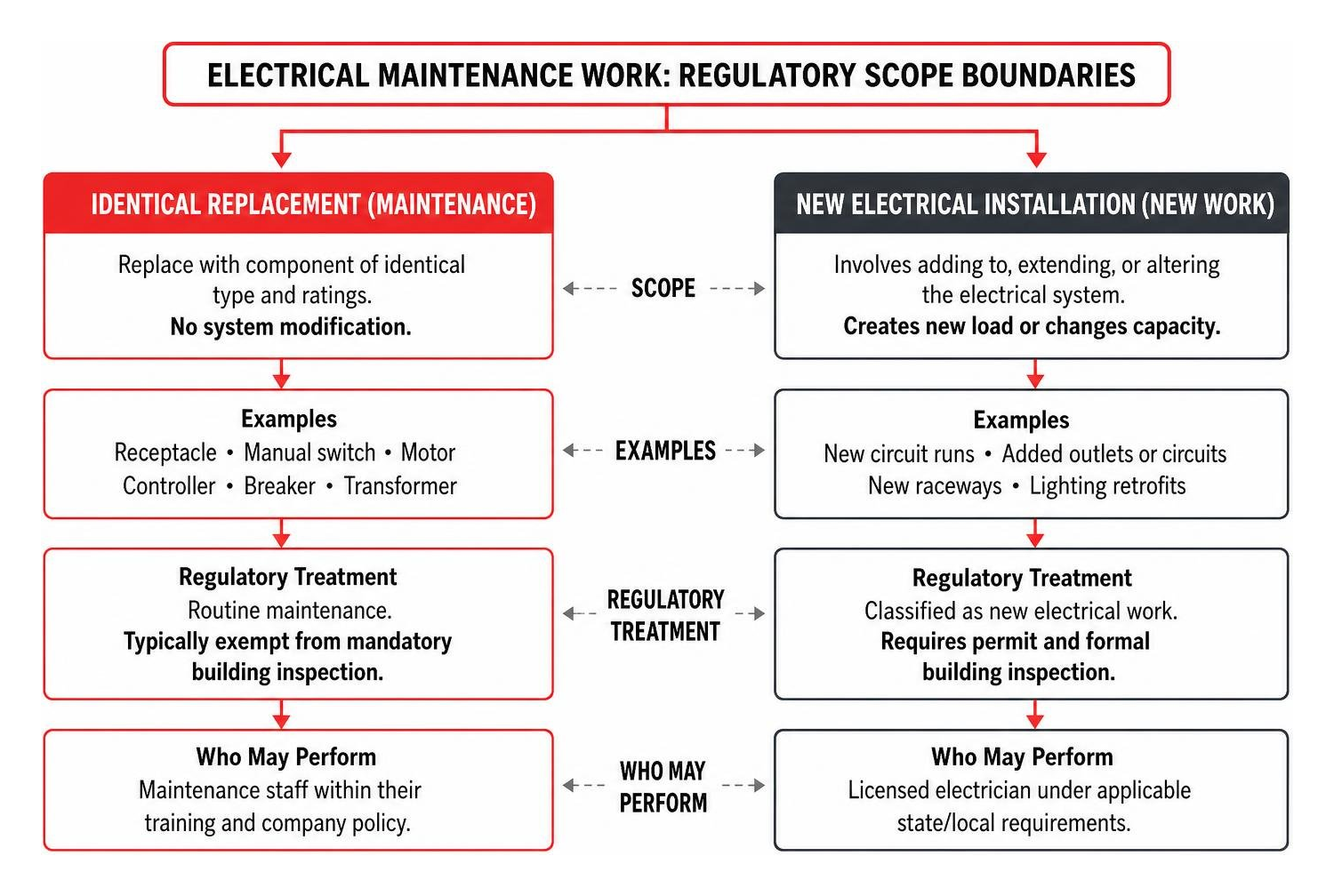
It is crucial to understand the legal boundaries governing a maintenance electrician’s role. Statutory regulations strictly limit unlicensed or general maintenance staff to identical component replacements—such as swapping a defective receptacle, manual switch, motor, or controller with a unit sharing identical voltage, phase, amperage, and horsepower characteristics.
Routine maintenance work is frequently exempt from mandatory state electrical building inspections. However, extending existing wiring runs, installing new circuit conductors, adding raceways, or undertaking lighting fixture retrofits are classified legally as new electrical work. These installations require licensed electrician oversight, proper permitting, and formal building inspection filings.
Understanding system limits prevents overloads and safety risks, highlighting The Importance of Electrical Capacity Planning for Growing Homes and Businesses.
Frequently Asked Questions about Electrical Maintenance Technical Programs
What is covered in an industrial electrical maintenance curriculum?
A full industrial electrical maintenance curriculum teaches foundational AC/DC theory, technical mathematics, blueprint reading, and electrical schematics. Technical courses cover industrial wiring, AC/DC motor controls, Variable Frequency Drives (VFDs), Programmable Logic Controllers (PLCs), fluid power (hydraulics and pneumatics), process control loops, robotics, and industrial safety (including OSHA-10 and NFPA 70E compliance).
How long does it take to complete an electrical maintenance program?
Program length depends on the credential tier:
- Certificate / Helper Programs: Require 400 to 800 clock hours (approx. 4 to 9 months).
- Comprehensive Vocational Diplomas: Take around 20 months and up to 2,160 clock hours.
- Associate in Applied Science (AAS) Degrees: Typically take 2 full academic years (6 to 7 quarters) to earn 121–139 total credits.
What is the difference between electrical maintenance and new installation work?
Electrical maintenance involves servicing, inspecting, testing, and replacing broken or worn electrical components with identical, direct-replacement parts to keep existing infrastructure operational. Maintenance and minor repair work are often exempt from mandatory building inspections.
Conversely, new installation work involves extending existing circuits, pulling new conductors, running new conduit, retrofitting lighting systems, or installing higher-capacity gear. New installation work requires formal permitting, adherence to current National Electrical Code updates, and mandatory inspection approval prior to concealing wiring.
Conclusion
Choosing the right technical training program opens the door to a rewarding career keeping vital facility infrastructure running smoothly. Look for programs with accredited coursework, robust hands-on labs, modern simulation technology, and clear coverage of major industry safety codes like OSHA, NEC, and NFPA 70E.
Whether you are looking to enter the trade or need expert care for your commercial facilities, working with experienced professionals makes all the difference. At Performance Electrical Contracting Inc., we deliver full-service electrical installation, maintenance, and repairs for commercial, multifamily, hospitality, and infrastructure projects across Jacksonville, FL and the Southeast. Contact our expert team today to keep your facility operating safely, efficiently, and reliably.