
Why Infrastructure Electrical Services Matter for Reliable Buildings
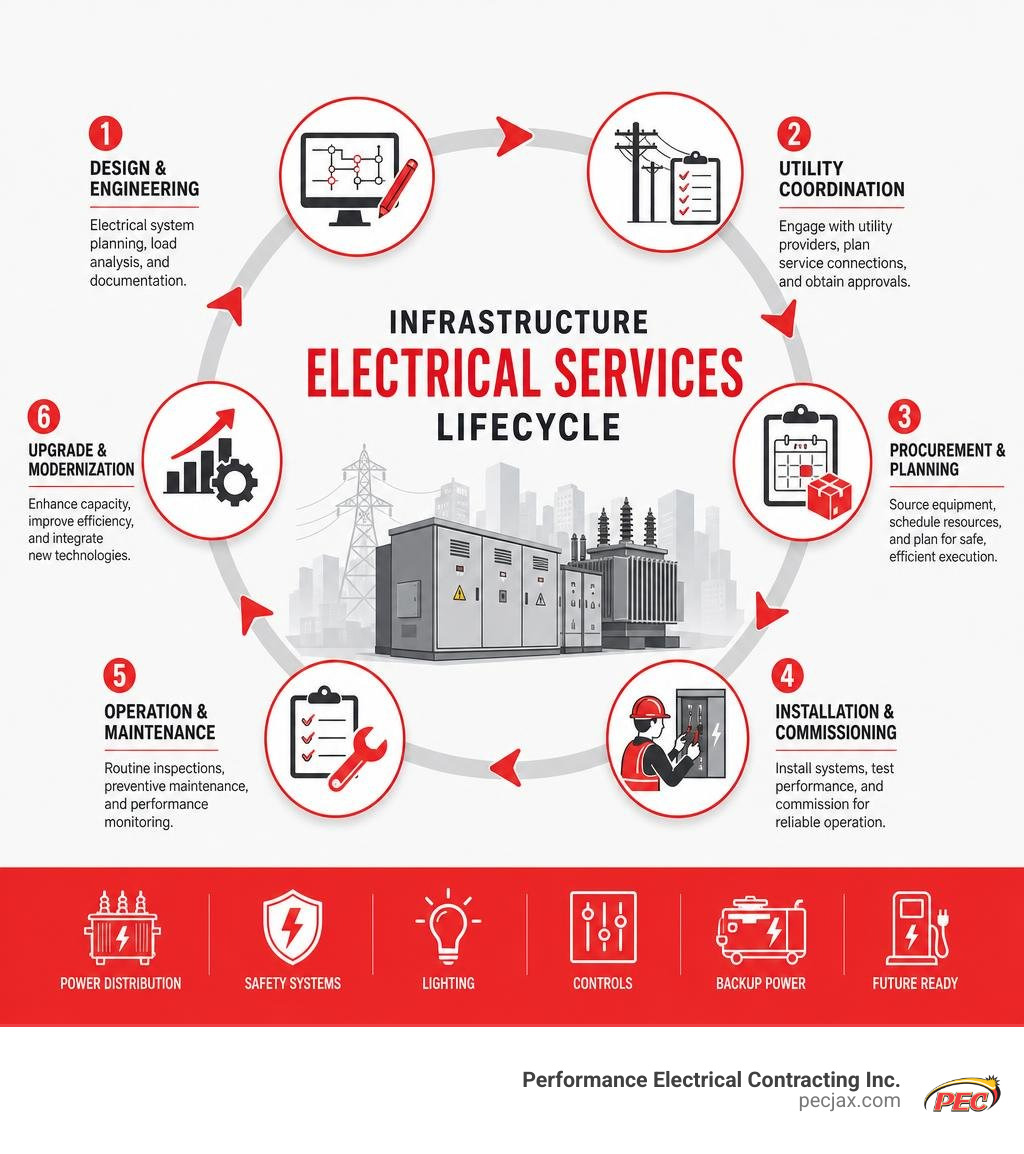
Infrastructure electrical services cover the planning, installation, testing, repair, and upgrade of the electrical systems that keep large properties and public facilities running. This includes power distribution, transformers, switchgear, utility connections, lighting, safety systems, controls, and backup power.
For property managers, the goal is simple: safe, code-compliant power with as little disruption as possible. The right electrical contractor helps protect uptime, control project risk, and build enough capacity for future loads such as EV charging, automation, battery storage, and expanded HVAC equipment.
Unlike routine commercial electrical work, infrastructure projects often involve larger service capacity, utility coordination, detailed engineering, phased shutdowns, and long-term maintenance planning. A missed detail can affect an entire building, campus, roadway system, or critical facility.
This guide explains what to look for when choosing an infrastructure electrical contractor, from preconstruction planning through emergency response and modernization of aging systems.
Core Scope of Infrastructure Electrical Services
When we talk about infrastructure electrical services, we are referring to the high-capacity systems that form the backbone of modern facilities. These builds are complex beasts. They require specialized engineering, robust equipment, and tight coordination with municipal utility providers before a single kilowatt flows through the lines.
At the heart of every robust electrical infrastructure project lies power distribution. This involves designing and configuring transformer switchboards, main switchgear, sub-panels, and heavy-duty feeders. Proper switchgear configuration guarantees that incoming electricity from the grid is stepped down safely and routed efficiently throughout a multi-building development or high-demand campus.
Connecting a major facility to the electrical grid isn’t as simple as plugging in a toaster. Utility interconnects require detailed demand load assessments, early coordination with regional utility providers, and strict compliance with local grid access standards. Without precise planning during utility connections, projects risk severe schedule delays and costly power quality issues down the road.
Smart Grid Integration in Infrastructure Electrical Services
Modern power networks must do more than just deliver electricity—they need to be intelligent, adaptable, and energy-efficient. Integrating smart grid solutions into infrastructure projects gives facility operators real-time control over their energy footprint through telemetry monitoring, automated load management, and distributed energy resources.
When utility grids experience peak demand or local outages, smart grid technologies step in seamlessly. By deploying microgrids paired with commercial battery energy storage systems (BESS), facilities can store energy during off-peak hours and dispatch power instantly when grid disruptions occur.
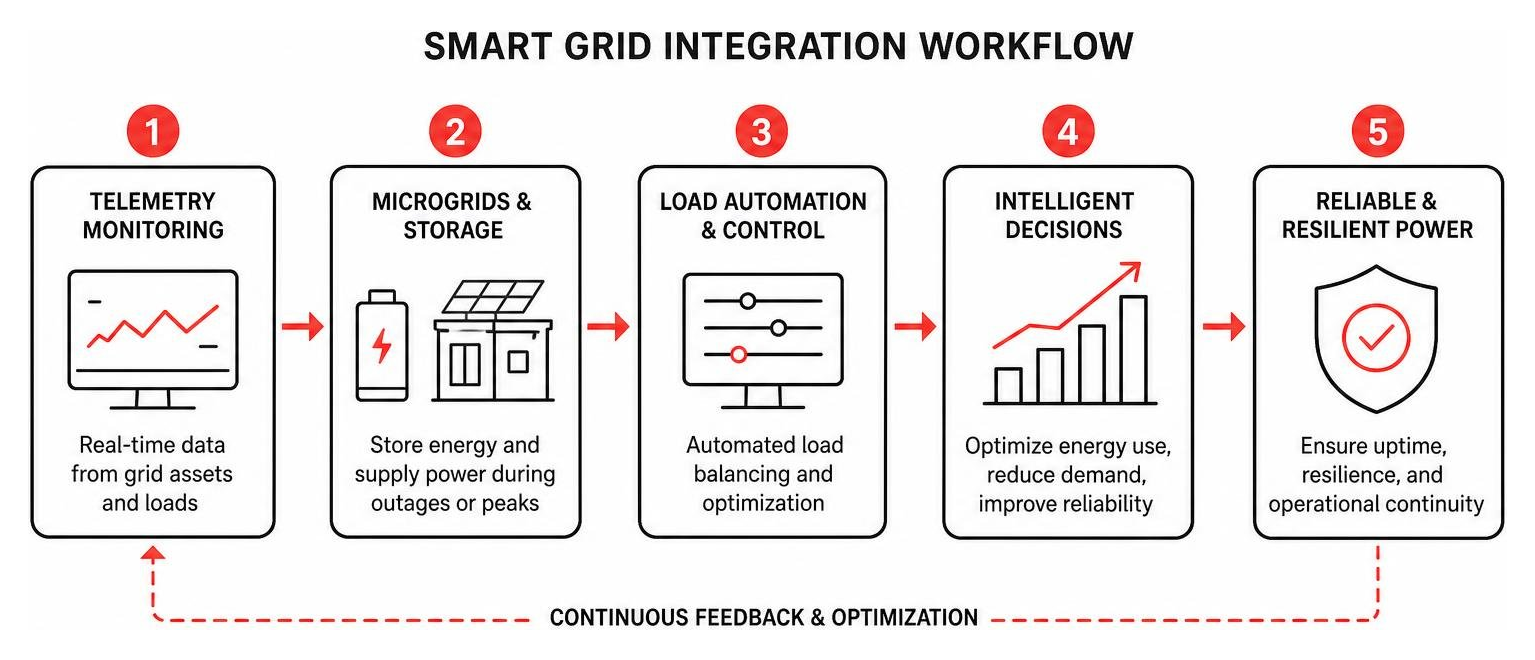
Automated load management automatically balances electrical loads across secondary circuits, preventing tripped breakers and optimizing overall system performance. To execute these multi-layered technologies, choosing comprehensive turnkey electrical solutions ensures that civil, structural, low-voltage, and high-voltage components are designed to work together without operational hiccups.
Specialized Infrastructure Electrical Services Across Industries
Every industry has unique power demands, environmental conditions, and risk profiles. A standard commercial office setup simply will not cut it when outfitting mission-critical environments where power loss is not an option.
- Data Centers: Require ultra-redundant power distribution, continuous backup generator integration, and precision control wiring to maintain 100% uptime for high-density server racks.
- Transit Systems & Highways: Rely on Intelligent Transportation Systems (ITS), including fiber optic communication backbones, CCTV monitoring, automated ramp metering, specialized bridge lighting, and high-power maritime or vehicle charging networks.
- Municipal Water & Public Works: Demand heavy-duty pump motor controls, emergency backup power systems, and corrosion-resistant conduit infrastructure capable of handling hostile environments.
- Traffic Signalization: Involves complex controller cabinets, vehicle detection loops, uninterrupted power supply (UPS) backups, and emergency vehicle preemption systems.
To understand how electrical demands vary across different building types, consider this side-by-side comparison:
| Feature / Requirement | High-End Residential | Commercial Facilities | Infrastructure & Mission-Critical |
|---|---|---|---|
| Typical Capacity | 200A to 600A+ | 800A to 2,000A | 2,500A to High Voltage Utility Feeds |
| Primary Focus | Aesthetics, luxury smart controls, high-capacity EV charging | Flexible floor plates, Title 24 efficiency, tenant lighting | Continuous uptime, redundant power, grid integration |
| Redundancy Level | Single service feed, optional generator or battery | Single or dual feed with backup generator | Multi-path redundancy, N+1 or 2N microgrids |
| Regulatory Focus | Local residential NEC standards | Commercial building codes, Title 24, local safety | Strict NEC, NFPA 70B, NETA, utility interconnect codes |
| Maintenance Model | As-needed repairs & periodic inspections | Scheduled tenant maintenance & lighting retrofits | Continuous 24/7 predictive monitoring & thermography |
Key Stages of Infrastructure Projects and Contractor Coordination
A successful infrastructure build is won long before the first wire is pulled. The lifecycle of a large-scale project moves through structured phases where early contractor involvement makes all the difference.
- Preconstruction & Design Review: During this phase, we conduct thorough demand load calculations, construct 3D BIM models, and evaluate value engineering options to eliminate spatial conflicts before site mobilization.
- Engineer of Record (EOR) Collaboration: Working closely with the EOR ensures that all transformer sizing, fault current calculations, and protective relay settings meet precise technical specifications.
- Blueprint Reviews & Utility Permitting: Navigating municipal permits and securing early approvals from utility providers prevents mid-construction hold-ups.
- Rough-In Wiring Phase: Executed right after structural framing and before walls or concrete pours seal off access. This phase involves running main conduit trunks, underground duct banks, low-voltage cabling trays, and grounding grids.
- Trim-Out Finishing & Equipment Setting: Setting transformers, landing heavy switchgear, terminating panelboards, and mounting specialized lighting fixtures.
- Testing, Commissioning, & Walkthrough: Conducting complete circuit testing, arc flash studies, and third-party inspections before energizing the site.
Early capacity planning is just as essential for public infrastructure as it is for commercial developments. Learn more by reading The Importance of Electrical Capacity Planning for Growing Homes and Businesses.
Overcoming Retrofitting Challenges in Aging Utility Infrastructure
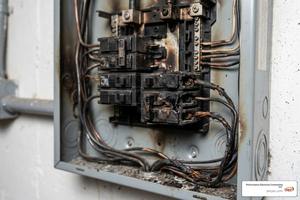
Modernizing aging infrastructure is like performing heart surgery on a runner mid-marathon—it requires absolute precision while keeping the vital systems alive. Older public facilities and industrial sites frequently suffer from outdated panelboards, undersized conduit runs, deteriorating insulation, and grounding systems that no longer meet current codes.
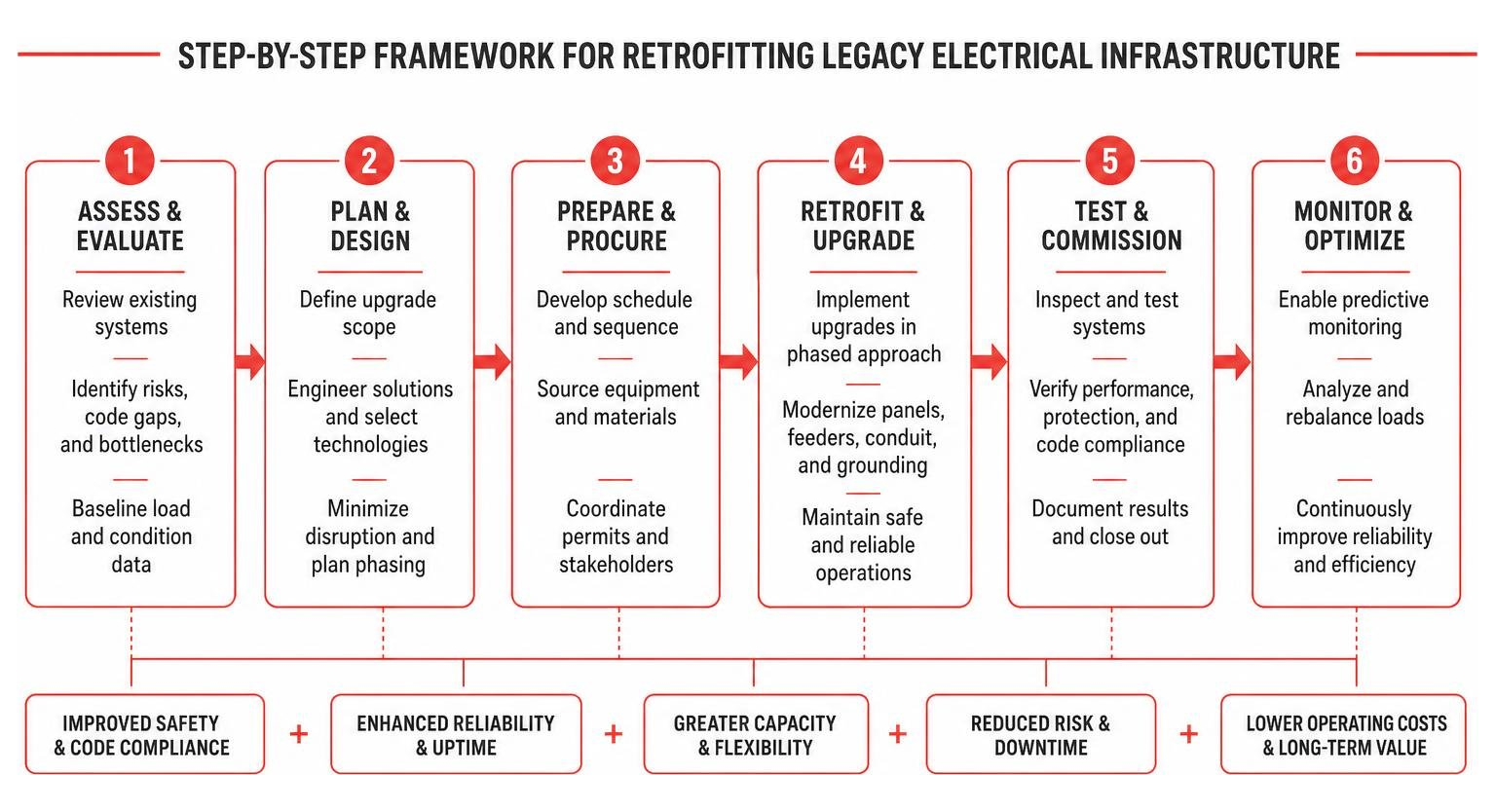
When retrofitting legacy distribution networks, we focus on four critical interventions:
- Panel Modernization: Replacing obsolete switchboards with compact, high-density distribution panels equipped with digital trip units.
- Grounding Enhancements: Upgrading ground rings, bonding jumpers, and surge protection devices (SPDs) to protect sensitive digital controls from lightning strikes and transient voltage spikes.
- Load Rebalancing: Redistributing electrical loads across underutilized phase legs to eliminate overheating and prevent nuisance breaker trips.
- Conduit & Feeder Upgrades: Rerouting high-capacity feeder cables through heat-resistant raceways to support higher power throughput.
Ignoring these aging signs can lead to sudden power outages or catastrophic electrical fires. Watch out for these red flags detailed in 5 Warning Signs Your Commercial Electrical System Needs Immediate Attention. Furthermore, replacing outdated terminal connections is a vital first step, as discussed in our guide on Why You Should Upgrade Old Electrical Outlets and Switches.
Streamlining Execution with Turnkey Engineering Solutions
Managing multiple sub-contractors, equipment suppliers, and engineering firms for a single electrical build is a recipe for budget overruns and finger-pointing. That’s why forward-thinking facility managers prefer turnkey engineering models.
Under an Engineer-Procure-Construct (EPC) framework, a single pre-qualified contractor assumes full accountability for the project from concept to startup. This single point of contact simplifies communication, centralizes material procurement, and speeds up project delivery.
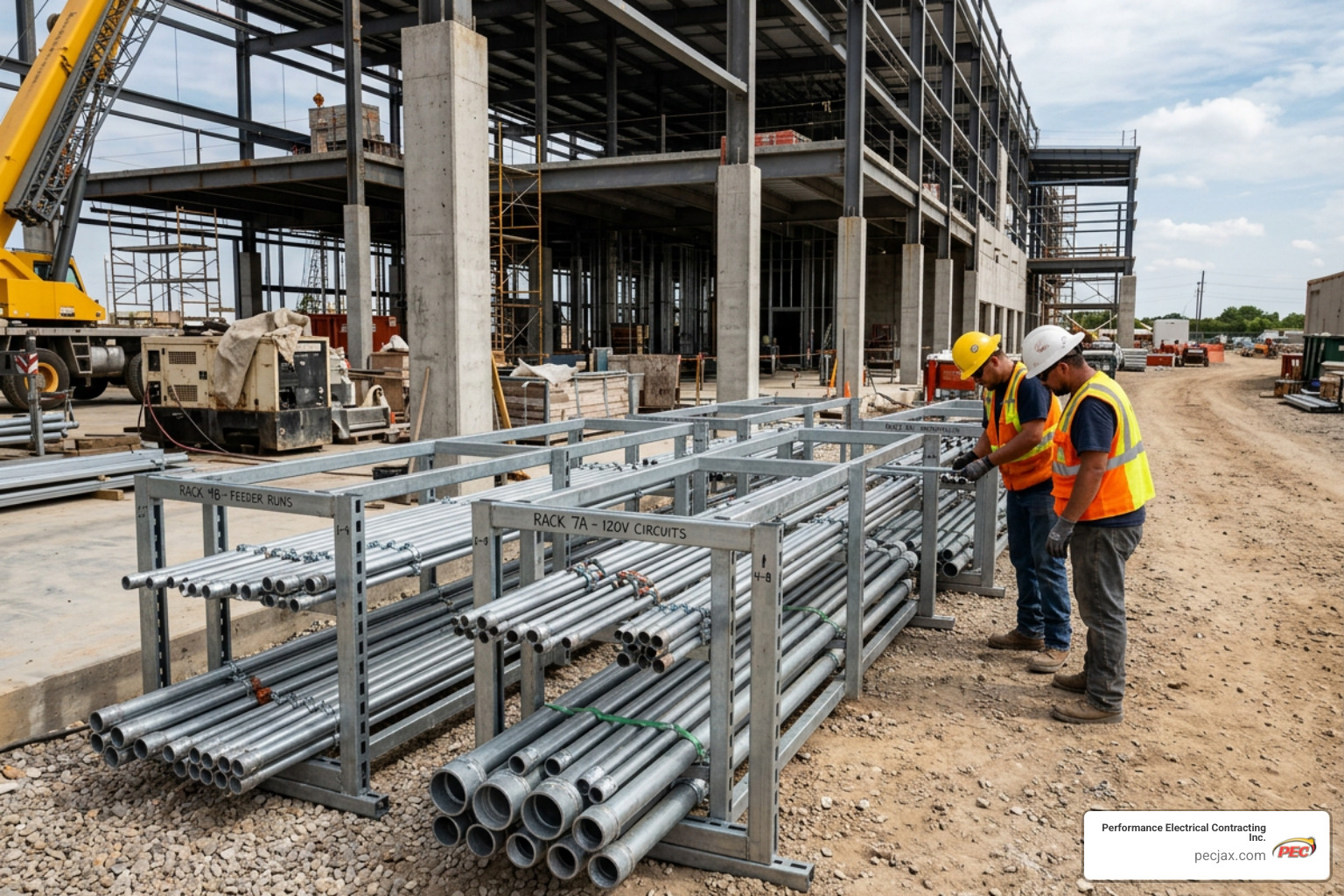
By utilizing off-site prefabrication—such as pre-assembled modular electrical rooms, conduit racks, and pre-wired panel assemblies—we can assemble complex components in a controlled factory environment. Prefabrication drastically reduces jobsite congestion, improves trade safety, and accelerates construction schedules, helping projects stay strictly on budget. For specialized project management and strategic guidance, working with expert Electrical Consulting Services helps streamline these complex workflows even further.
Ensuring Safety, Compliance, and Continuity in Major Builds
In high-voltage electrical construction, safety isn’t just a checklist—it is an uncompromising culture. Large-scale builds carry inherent risks that demand strict adherence to national standards and rigorous safety metrics.
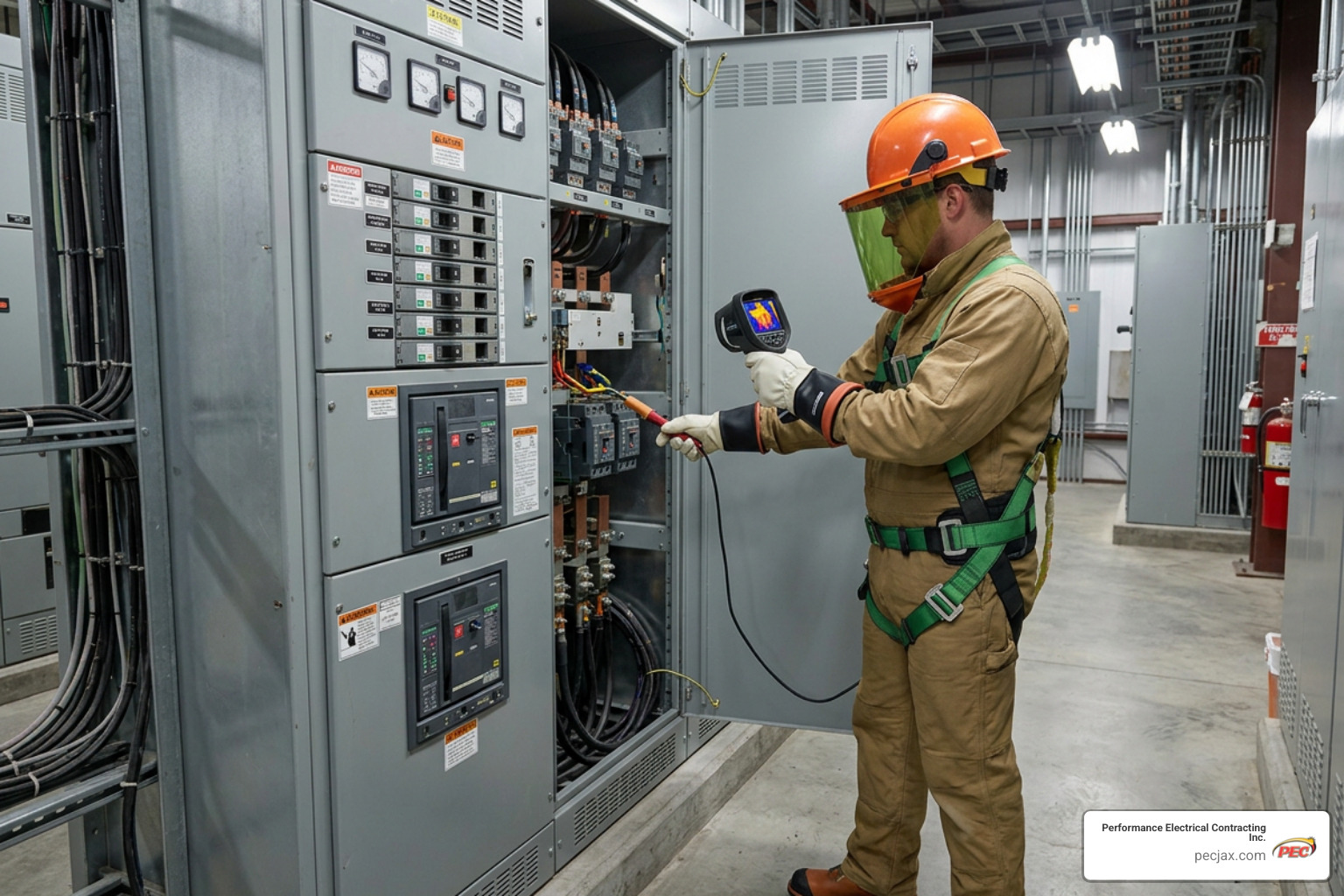
When evaluating electrical contractors, their Experience Modification Rate (EMR) is one of the clearest indicators of jobsite safety. An EMR below 1.0 indicates a safety record that outperforms the national industry average. Pairing top-tier EMR scores with strict National Electrical Code (NEC) compliance ensures that every raceway, box, and transformer meets mandatory fire and electrical safety standards.
Furthermore, operational standards like NFPA 70B (Standard for Electrical Equipment Maintenance) and NETA (InterNational Electrical Testing Association) guidelines dictate how high-voltage equipment must be inspected and maintained throughout its operating life.
Preventative Maintenance and Emergency Response Strategies
Good electrical infrastructure is invisible when it’s running smoothly—but when a switchgear fails at 2:00 AM, every minute of downtime costs thousands of dollars. A proactive maintenance strategy mitigates risk before catastrophic failures occur.
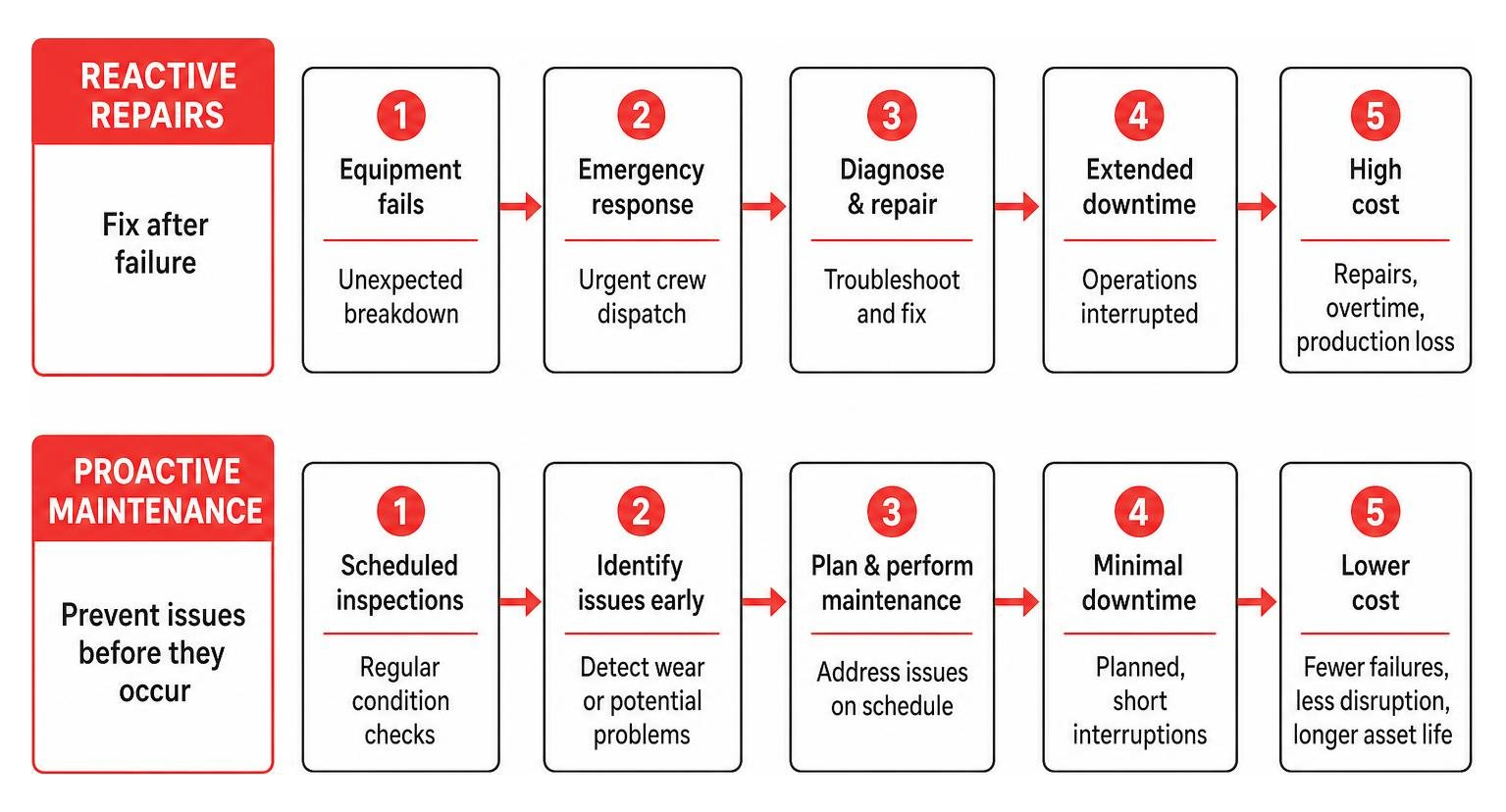
Our preventative maintenance programs combine advanced technology with rapid-dispatch field response:
- Thermal Imaging & Infrared Thermography: Detecting hidden electrical hotspots caused by loose connections or unbalanced phases long before equipment fails.
- Load Diagnostics & Power Quality Analysis: Identifying harmonic distortion, voltage sags, and transient spikes that degrade sensitive electronics over time.
- Fault Protection & Relay Calibration: Testing breaker trip response times to guarantee selective coordination during short-circuit events.
- 24/7 Emergency Dispatch: Mobilizing technicians and emergency backup generators instantly when severe weather or grid failures strike.
Regular inspections keep critical systems reliable and code-compliant. Learn more about routine safety checks with electrical switchgear maintenance standards, and discover household indicators by reviewing How to Tell When Your Home Needs an Electrical Safety Inspection.
Evaluating Pre-Qualified Contractors for Scale and Complexity
Choosing the right contractor for an infrastructure project requires looking far beyond a basic low bid. You need a partner with the financial stability, technical capacity, and manpower to back up their promises.
When vetting electrical contractors for large builds, evaluate these core criteria:
- Licensing & State Certifications: Ensure the contractor holds master electrical licenses and specialized state credentials for high-voltage and low-voltage systems in your region.
- Bonding Capacity: High bonding capacity demonstrates financial strength, giving project owners confidence that the contractor can handle multi-million-dollar builds without liquidity crunches.
- Preconstruction Technology: Look for contractors using advanced 3D Building Information Modeling (BIM), digital layout tools, and automated load calculation software.
- Off-Site Prefabrication Capabilities: Ask if the contractor operates an off-site assembly facility to pre-fabricate conduit racks, temporary power skids, and control panels.
- Proven Track Record: Review past project portfolios to confirm successful completion of public works, high-voltage utility connects, and complex facility infrastructure on schedule and on budget.
Frequently Asked Questions
What key factors determine the reliability of an infrastructure electrical contractor?
Contractor reliability comes down to verified safety performance (such as an EMR score well below 1.0), strong bonding capacity, a proven track record on complex builds, and full pre-qualification status. Reliable contractors also possess robust in-house preconstruction technology, certified technicians, and clear communication frameworks that guarantee projects finish on time and on budget.
How do turnkey electrical solutions reduce overall project risks and costs?
Turnkey electrical solutions establish a single point of accountability for design, procurement, construction, and commissioning. By eliminating the friction between separate engineering firms and field contractors, turnkey models streamline decision-making, prevent costly scope gaps, leverage bulk equipment procurement, and significantly shorten project timelines.
What is the best strategy for upgrading legacy infrastructure without operational downtime?
The most effective strategy involves careful pre-planning and phased cutovers. Contractors utilize temporary generator bypass networks, perform heavy hot-swaps during scheduled off-peak windows, and deploy prefabricated distribution modules that can be tied in quickly. Thermal imaging and load profiling beforehand ensure that temporary power arrangements safely handle facility demands during transition phases.
Conclusion
Building, modernizing, and maintaining electrical infrastructure requires a delicate balance of engineering expertise, strict code compliance, and relentless attention to safety. Whether you are upgrading an aging distribution grid, deploying microgrid storage, or building a high-capacity facility from the ground up, partnering with an experienced contractor is the most critical decision you will make.
At Performance Electrical Contracting Inc., we bring a partnership-focused approach to every build across Jacksonville, FL, and the Southeast U.S. As a pre-qualified contractor delivering value-driven, on-time, and on-budget solutions, we treat your operational continuity as our top priority.
Ready to power your next project with precision and safety? Connect with the experts at Performance Electrical Contracting today, and let’s build an electrical foundation designed to stand the test of time.