
Reliable Multifamily Electrical Services Start With a Clear Plan
Multifamily electrical services help apartment, condominium, and mixed-use property managers keep buildings safe, code-compliant, and ready for modern power demands. The right electrical contractor can assess aging equipment, correct hazards, upgrade capacity, and plan work around residents and daily operations.
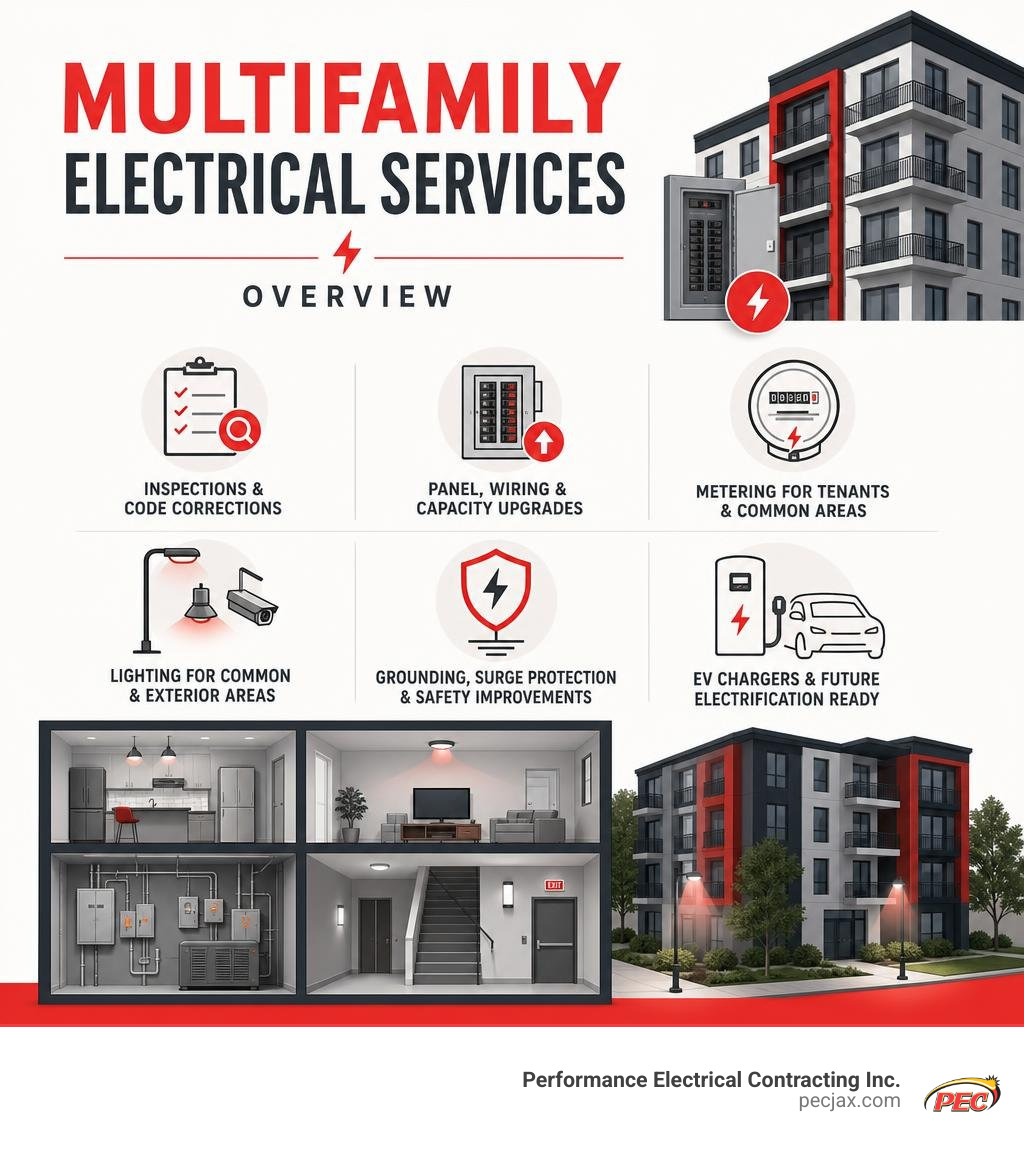
Common services include:
- Electrical inspections, troubleshooting, and code corrections
- Panel, breaker, wiring, and service-capacity upgrades
- Tenant, house-load, and common-area metering work
- Common-area, exterior, emergency, and security lighting
- Grounding, bonding, surge protection, and safety improvements
- EV charger, smart-building, and future electrification preparation
For a property manager, the goal is not simply to keep the lights on. It is to avoid breaker trips, failed inspections, unplanned outages, and expensive rework while protecting residents and the value of the property.
Multifamily systems face unusually complex demands. One building may need separate electrical service for every unit, owner-paid common areas, retail spaces, and future EV charging. Older panels and undersized services can struggle as tenants add modern appliances, electronics, HVAC equipment, and electric vehicles. A professional plan helps identify those limits before they become disruptions.
Core Multifamily Electrical Services and System Upgrades
Managing a multi-unit property means balancing tenant comfort with underlying infrastructure reliability. Unlike single-family homes, apartment complexes and condominiums operate under continuous high demand across individual dwelling units and shared facilities. Providing top-tier multifamily electrical services requires a holistic approach that balances immediate repairs with proactive system upgrades.
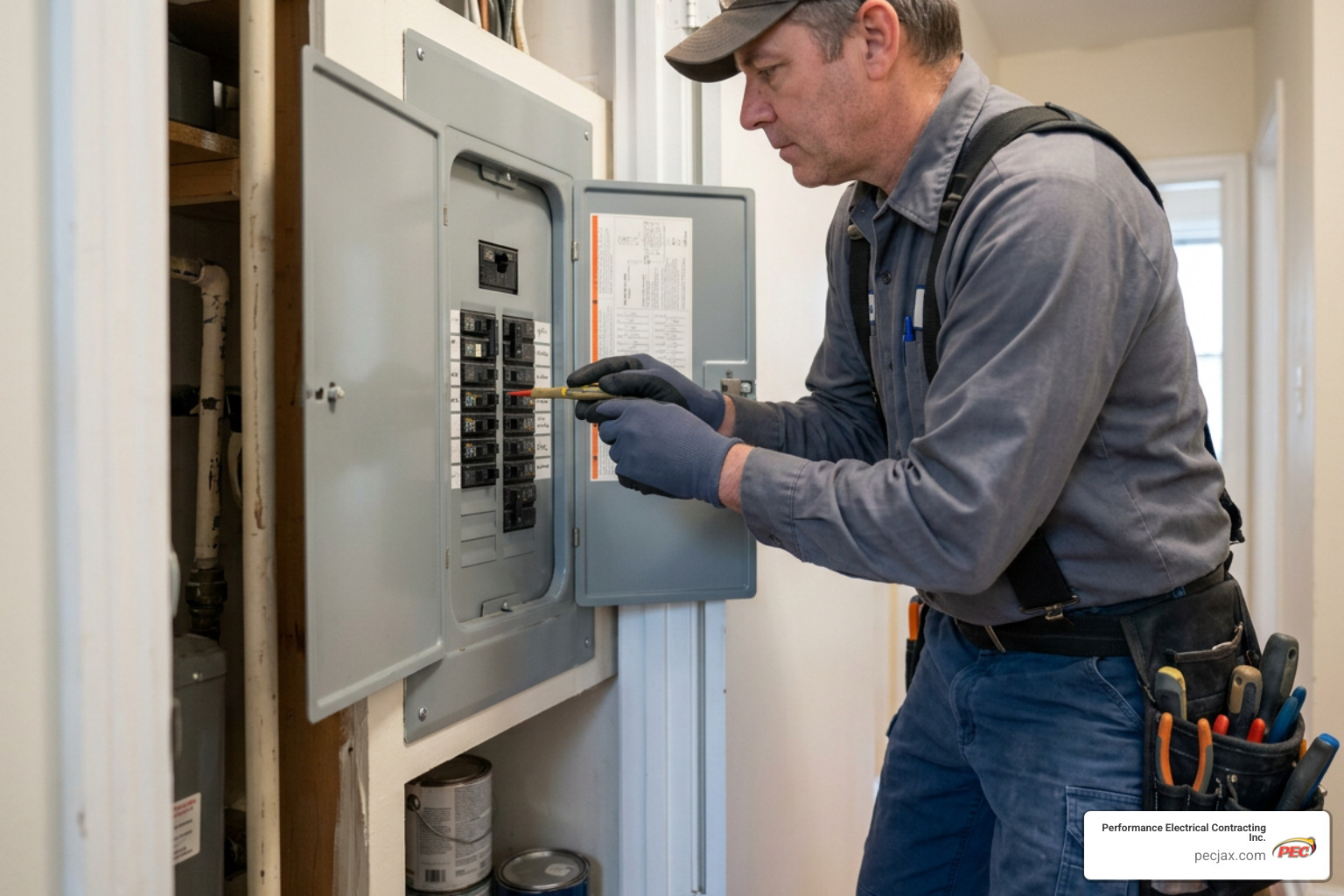
When electrical systems begin to show their age, the impact is felt across the entire facility. From recurring breaker trips to flickering lights in hallways, ignoring minor issues can lead to severe operational setbacks or safety liabilities. Recognizing the early indicators of electrical stress is vital for facility managers. For a deeper dive into critical operational red flags, review our guide on 5 Warning Signs Your Commercial Electrical System Needs Immediate Attention.
Modern multi-unit facilities rely on several core electrical upgrades to maintain safety and performance:
- Panel Retrofits & Capacity Expansions: Replacing obsolete panelboards with modern, high-amp distribution hardware to safely absorb increased resident energy usage.
- Submetering & Smart Meter Banks: Setting up clear submetering configurations to separate individual tenant power usage from landlord-paid common areas and commercial facilities.
- Insurance Compliance Upgrades: Replacing high-risk, discontinued electrical equipment to meet strict insurance underwriting mandates and lower property liability.
- Comprehensive Diagnostics & Inspections: Performing routine thermographic scanning and load tests to catch overheating components before hardware fails.
Panel and Circuit Upgrades for Modern Power Demands
As property management teams know all too well, tenant power expectations have skyrocketed. A building constructed twenty or thirty years ago was never designed to power multiple smart TVs, high-draw kitchen appliances, central air conditioning, portable space heaters, and personal electronics simultaneously. When current electrical demands overwhelm older panels, circuit breakers trip, electrical contacts overheat, and potential fire hazards develop.
Upgrading electrical panels and individual unit circuits restores baseline stability. Replacing old, undersized subpanels with high-capacity breaker panels gives tenants the reliable power they expect without constantly overloading shared transformers. Furthermore, retrofitting unit wiring allows property owners to safely update outdated electrical outlets and switches to accommodate high-power appliances and sensitive modern electronics. If your property still relies on aged wiring or worn outlets, explore Why You Should Upgrade Old Electrical Outlets and Switches to understand the safety benefits of a complete outlet refresh.
Modernizing Common Area Lighting and Security Infrastructure
First impressions matter, but safety matters even more. Common area lighting—spanning parking garages, breezeways, stairwells, clubhouses, and exterior pathways—plays a direct role in tenant safety and overall resident satisfaction. Dark walkways or dim stairwells invite security risks and increase slip-and-fall liabilities for property management.
Modernizing shared spaces involves migrating aging fluorescent or high-pressure sodium fixtures over to high-efficiency LED systems integrated with smart motion controls and automated photocells. Beyond illuminating dark corners, modern lighting updates dramatically curb common area electricity bills.
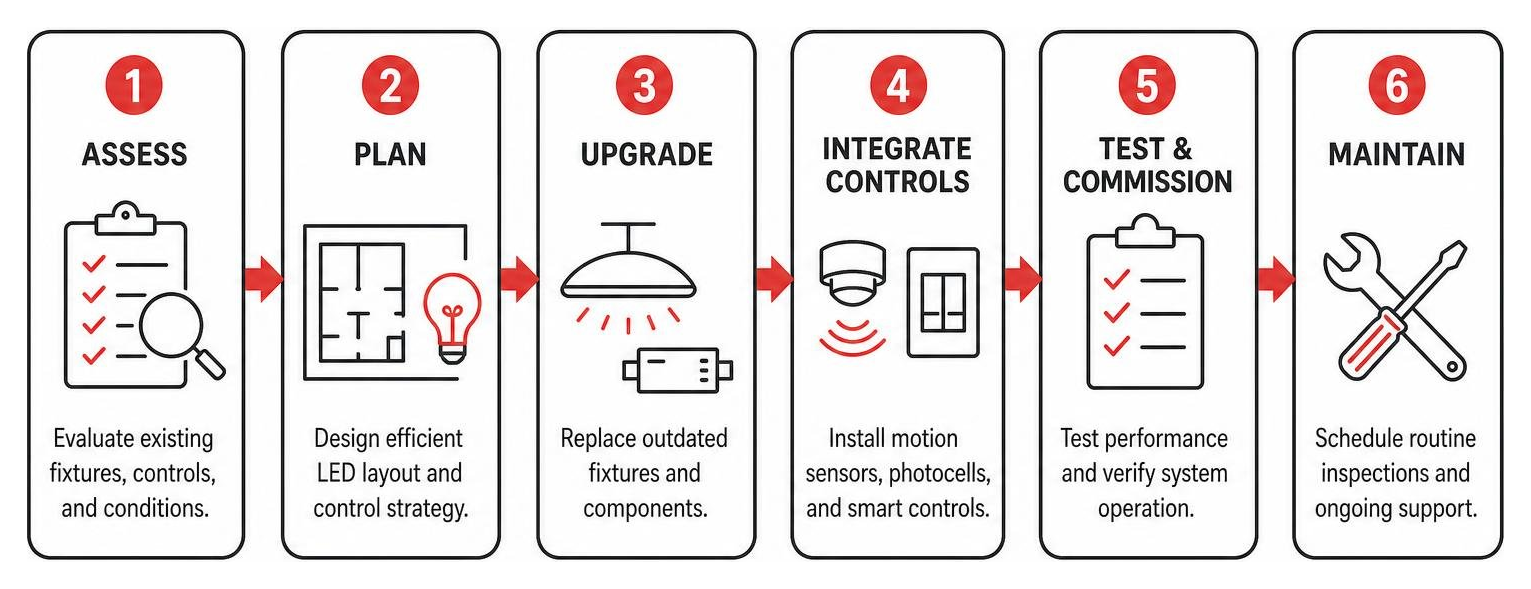
Alongside lighting upgrades, robust electrical planning must include surge protection devices (SPDs) installed at main distribution panels to protect communal HVAC units, fire alarm systems, access control gates, and elevator controllers from voltage spikes. Routine preventative maintenance schedules ensure emergency battery backup lights and illuminated exit signs operate seamlessly during power outages. If you are unsure whether your property’s communal power grid is fully code-compliant, learn How to Tell When Your Home Needs an Electrical Safety Inspection to maintain total peace of mind.
Preventing Costly Design Errors and Ensuring Code Compliance
Proper planning and engineering lie at the heart of every successful multi-unit project. Whether constructing a new multi-unit facility or planning a major adaptive reuse retrofit, electrical design mistakes can lead to schedule delays, budget overruns, and failed inspections from local building officials.

Avoiding undersized service bottlenecks starts with accurate engineering calculations during the initial schematic design phase. National Electrical Code (NEC) Article 220 and Table 220.84 provide standard calculation methods for multifamily dwelling unit loads, taking into account demand factors and appliance diversity. However, simply adhering to minimum code minimums often leaves zero room for future expansion. Modern engineering standards recommend integrating a 15% to 20% capacity headroom into initial service calculations to handle future electrification without costly transformer replacements down the road.
Space planning in electrical rooms is another area where projects often run into trouble. NEC 110.26 mandates minimum working clearances around panelboards and electrical equipment—typically requiring at least 3 feet of clear depth, a 30-inch workspace width, and 6.5 feet of headroom. When space planning is rushed, electrical rooms end up overcrowded, leading to severe code violations and logistical headaches for service technicians. Utilizing Building Information Modeling (BIM) and 3D trade coordination during design allows us to align electrical conduit runs with plumbing risers, fire sprinklers, and HVAC ductwork before installation begins.
Critical Role of Grounding and Bonding in Multifamily Systems
Few aspects of electrical safety are as critical—or as frequently misunderstood—as proper grounding and bonding. Grounding and bonding errors are among the leading reasons multi-unit electrical projects fail municipal building inspections.
Governed strictly by NEC Article 250, grounding establishes a direct physical connection to the earth to safely disperse transient voltage spikes caused by lightning strikes or utility line surges. Bonding, on the other hand, electrically connects non-current-carrying metallic components—such as metal conduit, structural steel, water pipes, and equipment enclosures—to establish an effective ground-fault current path back to the main power source.
When grounding electrode conductors are undersized, or when subpanels improperly tie neutral and ground conductors together downstream of the main service disconnect, severe safety risks arise. Miswired grounds allow stray electric current to travel along metal framing or plumbing pipes, creating electric shock hazards, signal noise in communications cables, and breaker trip failures during ground faults. Ensuring a separate equipment grounding conductor (EGC) runs with every feeder circuit protects both structural components and resident safety.
Navigating Local AHJ Code Compliance and Metering Layouts
Achieving code compliance requires navigating the specific requirements enforced by your local Authority Having Jurisdiction (AHJ). While the NEC serves as the foundational benchmark across North America, local municipalities frequently adopt specific code amendments and enforce varying code release years. Staying current with local Arc-Fault Circuit Interrupter (AFCI) and Ground-Fault Circuit Interrupter (GFCI) protection mandates is essential to avoid rework during final site inspections.
Metering design represents another specialized challenge in multi-family facilities. Multi-unit developments require organized metering structures tailored to property ownership boundaries:
- Individual Tenant Metering: Dedicated meter socket banks measuring kilowatt-hour consumption for each apartment, directly billed to residents.
- Owner / House Panels: Dedicated service panels powering shared common areas, security system controls, exterior lighting, irrigation pumps, and administrative offices.
- Dedicated Auxiliary Submetering: Specialized meter banks designed for third-party billing of commercial retail spaces, EV charging stations, or shared laundry facilities.
Securing formal utility load letters and working directly with regional electric utility engineers early in the process guarantees that exterior transformer pads, meter banks, and utility service drops line up with local infrastructure capabilities.
Future-Proofing Properties with EV Charging and Smart Tech
The rapid shift toward personal electric vehicles and smart home automation is reshaping resident preferences across the housing market. Modern tenants expect access to high-speed digital amenities and fast, reliable EV charging directly outside their front doors. Investing in future-ready multifamily electrical services allows property managers to enhance property values and maintain higher long-term occupancy rates.
Future-proofing a property is far more cost-effective when addressed proactively rather than through piecemeal retrofits. Installing oversized electrical conduits, spare subpanel slots, accessible busways, and designated raceways to carport or roof zones allows properties to seamlessly add solar PV arrays or expanded charging networks down the road without cutting open finished walls. For a strategic breakdown on long-term power design, read about The Importance of Electrical Capacity Planning for Growing Homes and Businesses.
Value-Adding Smart Technology and Energy Efficiency
Integrating smart technology into multi-unit properties drives down operational overhead while delivering high-tech living amenities that boost tenant appeal. Smart buildings make property management significantly easier by placing automated energy controls directly into property managers’ hands.
Key smart efficiency additions include:
- Centralized Energy Management: Smart thermostats in common areas and vacant units automatically adjust temperatures, cutting utility expenses on unoccupied square footage.
- Submetering Integration: Digital submeters let property managers monitor real-time energy usage across complex amenities like clubhouses, fitness centers, and heated pools.
- Smart Access Controls & Lighting: Keyless door entry locks, automated common room lighting schedules, and remote monitoring simplify site operations for onsite maintenance personnel.
- Water Leak Detection Systems: Smart motorized shutoff valves linked to moisture sensors prevent catastrophic water damage in multi-story residential towers.
Strategies for EVSE Capacity Planning in Multifamily Electrical Services
Electric Vehicle Supply Equipment (EVSE) is fast transitioning from a premium amenity to a standard property requirement. However, retrofitting dozens of 40-amp, Level 2 chargers onto an existing electrical service can quickly strain overall transformer capacity if executed without strategic load management.
Implementing intelligent dynamic load management (DLM) systems allows properties to install multiple EV charging stations on a shared power feed. Dynamic monitoring balances power output in real time across active vehicles—delivering maximum charging rates overnight when resident building power consumption drops, and capping output during peak evening power hours.
| Service Capacity Strategy | Initial Transformer Allocation | Headroom Allowance for Expansion | EV Charging Capability | Long-Term Upgrade & Rework Risk |
|---|---|---|---|---|
| Standard Minimum Design | Calculated to baseline NEC minimums | 0% – 5% extra headroom | Limited to 1–2 slow Level 1 chargers | High risk of expensive service overhauls |
| Future-Proofed Design | Engineered with expanded main service | 15% – 20% built-in headroom | Supports scalable Level 2 EVSE network | Minimal overhaul risk; ready for rapid expansion |
Executing Seamless Upgrades with Minimal Tenant Disruption
Performing major electrical upgrades in fully occupied apartment complexes or condominium towers takes careful planning. Turning off power to a building disrupts work-from-home tenants, stops elevators, deactivates security gates, and affects refrigeration across dozens of units. Minimizing resident downtime requires proactive project management, phased construction schedules, and open lines of communication.
At Performance Electrical Contracting Inc., we minimize tenant disruption by executing complex retrofits in calculated, bite-sized phases. Our teams coordinate with property management to schedule necessary power interruptions during off-peak weekday hours when many residents are away. We also deploy temporary generator feed bypasses to keep critical safety systems—such as hall emergency lighting, access control locks, and fire alarm panels—fully operational during service upgrades.
Clear communication prevents resident frustration. Providing advance written notice regarding scheduled power outages, setting clear work windows, maintaining clean, dust-controlled work areas in shared corridors, and keeping walkways free of tools and safety hazards keeps residents safe and informed throughout the construction process.
Choosing the Right Contractor for Essential Multifamily Electrical Services
Selecting the right commercial electrical contractor can make or break your capital upgrade project. Multi-unit electrical work requires far more than basic residential wiring experience; it demands deep expertise in commercial distribution systems, strict code compliance, utility company coordination, and tenant management logistics.
When vetting potential electrical partners, look for the following qualifications:
- Proven Commercial & Multifamily Track Record: Verified experience managing multi-unit panel retrofits, site-wide exterior lighting overhauls, and commercial power distribution projects.
- Pre-Qualified Contractor Credentials: Full state licensing, comprehensive commercial liability insurance coverage, and bonding capacity for large-scale capital projects.
- Transparent Pricing Models: Detailed line-item estimates that eliminate hidden fees and clearly outline materials, labor, permit costs, and equipment fees upfront.
- Flexible Project Financing Options: Structured payment milestones, capital financing options, and utility rebate assistance to keep major infrastructure modernizations within budget.
- Dedicated Safety Protocols: Rigorous site safety standards, lock-out/tag-out compliance, OSHA-certified electricians, and dedicated quality assurance checks.
As a trusted partner operating across Jacksonville, FL and the Southeast U.S., Performance Electrical Contracting Inc. brings a partnership-focused approach to every project. We deliver on-time, value-driven solutions that protect your physical asset, reduce overall operating expenses, and keep your residents safe.
Frequently Asked Questions About Multifamily Electrical Systems
What are the main signs an apartment complex needs an electrical upgrade?
Frequent circuit breaker trips, flickering lights in common areas, burning odors near panelboards, warm outlet covers, and outdated fuse boxes or discontinued electrical panels are clear indicators that your system is overloaded. Additionally, if your property fails to meet current property insurance coverage guidelines or cannot support high-draw tenant appliances and EV chargers, a service upgrade is necessary.
How much extra capacity should developers design into new buildings?
Industry standards recommend building a 15% to 20% capacity headroom into initial service transformer and panel design calculations. This buffer accommodates rising baseline electricity consumption, future smart technology integrations, communal solar installation, and the rapid rollout of multi-station electric vehicle charging networks without requiring major structural rework.
How do property managers minimize resident downtime during retrofits?
Minimizing resident disruption requires structured project logistics:
- Schedule power interruptions during off-peak weekday hours (typically 9:00 AM to 3:00 PM).
- Issue written notices to residents at least 48 to 72 hours in advance.
- Execute upgrades in staged, unit-by-unit or building-by-building phases rather than full site shutdowns.
- Deploy temporary backup generators to power critical security gates, access controls, emergency hallway illumination, and fire alarms.
Conclusion
Upgrading and maintaining the electrical system of a multi-unit property is a strategic investment in safety, liability control, tenant satisfaction, and long-term asset value. From correcting aging electrical panelboards and securing grounding paths to modernizing common area illumination and engineering scalable EV charging networks, professional electrical upgrades prevent costly downtime and keep your asset future-ready.
At Performance Electrical Contracting Inc., we bring extensive industry knowledge, transparent pricing, and rigorous quality standards to every multi-unit electrical project across Jacksonville, FL and the Southeast U.S. Whether you are addressing critical safety repairs, planning a major capital panel replacement, or future-proofing your community with modern amenities, our pre-qualified team delivers on-time, value-driven results tailored to your facility goals. Schedule a consultation with Performance Electrical Contracting Inc. today to discuss your property’s electrical needs.