
Safety Prerequisites and Generator Sizing Before Wiring
To connect a portable generator to your house safely, install a weatherproof outdoor power inlet box wired through conduit to a dedicated double-pole breaker in your main panel, and use a listed mechanical interlock kit or manual transfer switch to prevent utility backfeed. This setup lets you energize selected home circuits without running extension cords through doorways or creating a hazardous double-male connection.
Before touching a single wire or purchasing an inlet box, generator safety starts with physical placement. The U.S. Consumer Product Safety Commission (CPSC) reports that portable generators cause over 900 carbon monoxide fatalities annually in the United States, with 742 deaths recorded between 2012 and 2022 alone. A running portable generator emits massive amounts of toxic exhaust—producing as much carbon monoxide in 10 minutes as a standard car engine produces in an entire hour. Over 70% of generator-related CO fatalities occur when units are improperly operated indoors or inside attached garages.
Because of this hazard, the CPSC mandates the 20-foot rule: always operate your generator outdoors, at least 20 feet away from any door, window, vent, or soffit, with the engine exhaust pointed directly away from the structure. Modern portable units certified to ANSI/PGMA G300-2023 or UL 2201 incorporate automatic CO shutoff sensors (shutting down before concentrations reach dangerous thresholds), but these safety features are a backup, not a substitute for proper outdoor clearance.
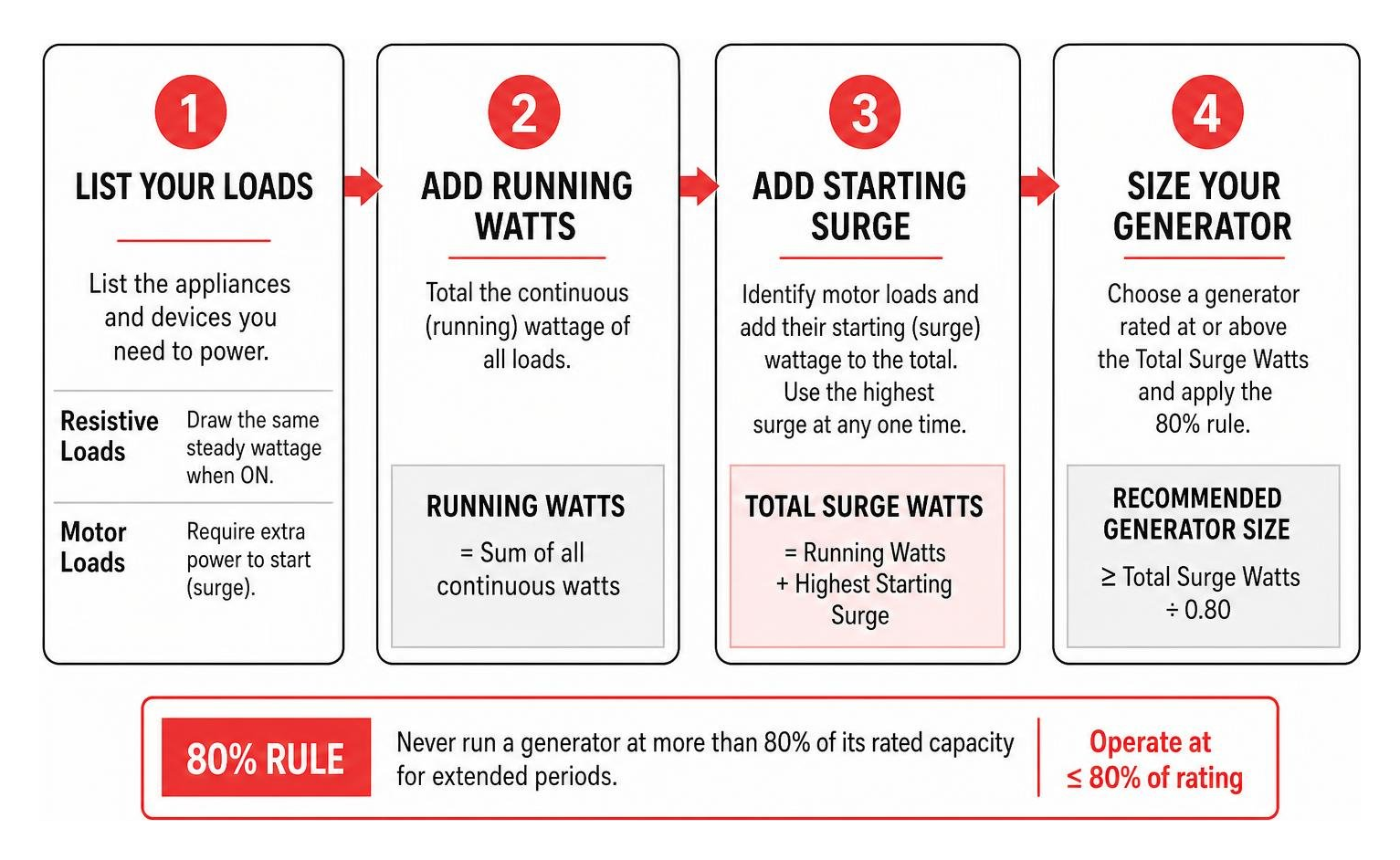
Once you establish a safe location, you must calculate your actual electrical demand. Sizing a generator requires balancing continuous running wattage against short-duration motor starting surges while considering assessing electrical capacity planning to avoid overloading your home circuits. Additionally, apply the standard 80% continuous load rule: never design your system to run a generator at more than 80% of its rated capacity for extended periods.
Calculating Starting Surge and Continuous Electrical Loads
Every electrical load in your home falls into one of two categories:
- Resistive Loads: Devices such as incandescent lights, electric baseboard heaters, toasters, and water heaters draw the same steady wattage from the moment they turn on until they shut off.
- Inductive Loads: Equipment with electric motors or compressors—including refrigerators, well pumps, sump pumps, and air conditioning units—require a massive initial burst of power known as starting surge or Locked Rotor Amps (LRA). This momentary draw can be two to four times higher than the running wattage.
To determine your necessary generator size, add together the running wattage of all critical appliances you intend to power simultaneously, identify the single largest motor-driven appliance, and add its starting surge requirement to that total.
How to Connect a Portable Generator to Your House: Safe Wiring Methods
National Electrical Code (NEC) Article 702 governs optional standby systems. The core mandate of NEC 702.5 is mechanical isolation: you must use listed equipment to physically prevent the generator and the electric utility grid from interconnecting simultaneously.
Implementing proper preventing home electrical hazards protects your family, prevents equipment damage, and safeguards lineworkers restoring power. There are three primary methods to connect a generator during an emergency outage:
| Connection Method | Cost Range (Installed) | Permit Required? | Whole-Panel Flexibility? | Hardwired Loads (Well/Furnace)? |
|---|---|---|---|---|
| Direct Extension Cords | $50 – $200 | No | No (appliances only) | No |
| Panel Interlock Kit + Inlet | $450 – $900 | Yes | Yes (full panel access) | Yes |
| Manual Transfer Switch (MTS) | $900 – $1,900 | Yes | No (dedicated 6–10 circuits) | Yes |
While direct extension cords work well for small electronics and standalone refrigerators, they cannot run hardwired equipment like furnace blowers, well pumps, or multi-wire branch circuits. A panel interlock kit or manual transfer switch is required to safely energize home circuits from a portable generator.
Core Hardware Needed to Connect a Portable Generator to Your House
To safely link your generator to your home’s breaker panel using an interlock setup, you need specific, listed electrical components. For an in-depth breakdown of these components, consult this safe generator wiring and hookup guide.
- Weatherproof Power Inlet Box: A NEMA 3R outdoor enclosure mounted to your exterior wall containing male prongs (a NEMA L14-30 inlet for up to 30 amps / 7,500 watts, or a NEMA 14-50 inlet for up to 50 amps / 12,000+ watts).
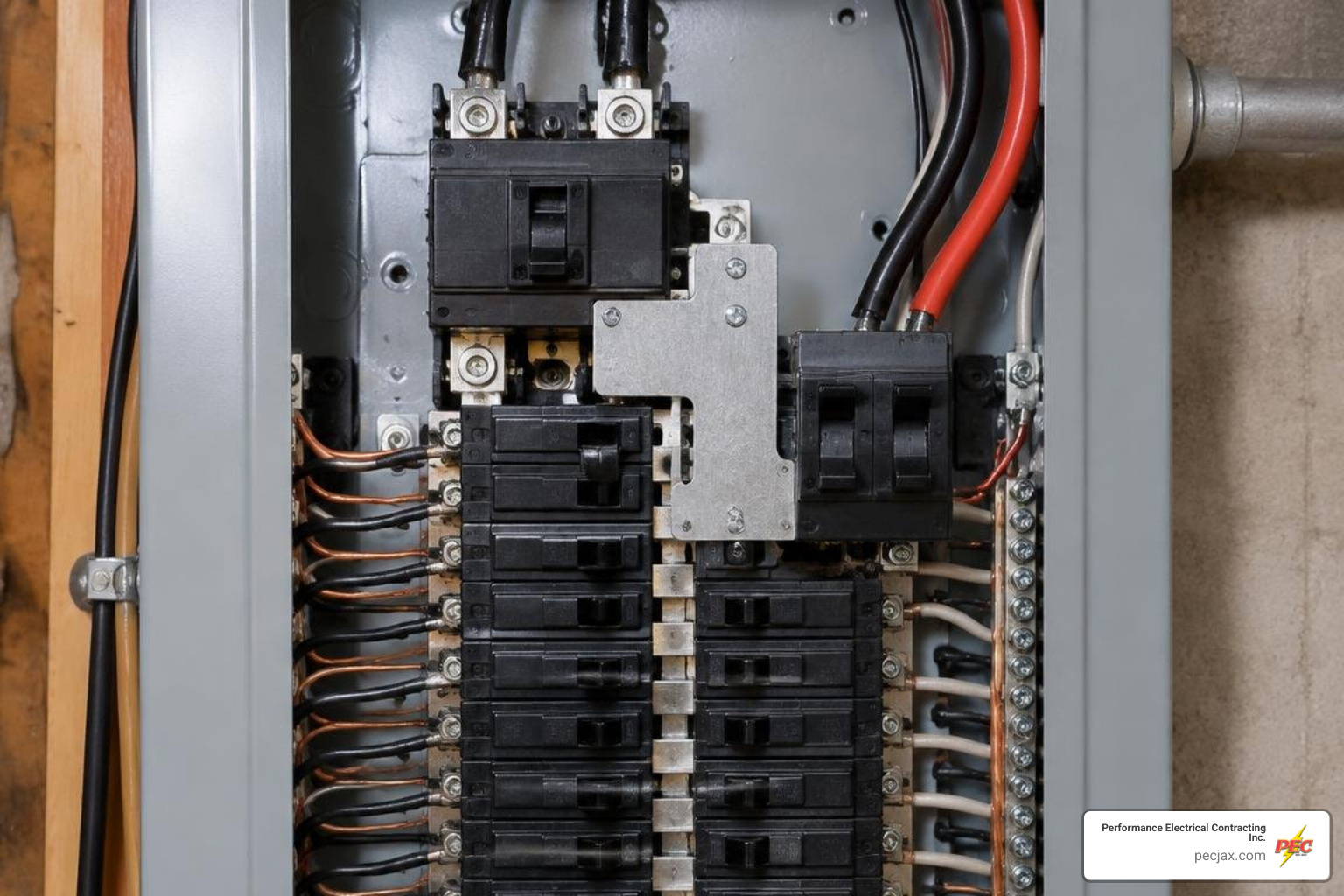
- Dedicated Double-Pole Breaker: A dedicated 30A or 50A two-pole circuit breaker installed in the top positions of your main breaker panel to feed power across both 120V bus bars.
- Heavy-Gauge Copper Wiring: 10 AWG copper wire for 30-amp systems (rated up to 7,200W continuous) or 6 AWG copper wire for 50-amp systems, run through liquid-tight metallic or non-metallic conduit from the inlet box to the panel.
- Mechanical Interlock Plate: A UL-listed metal plate engineered precisely for your electrical panel model that physically blocks the generator breaker from turning on unless the utility main breaker is completely switched off.
The Dangers of Backfeeding and Banned Suicide Cords
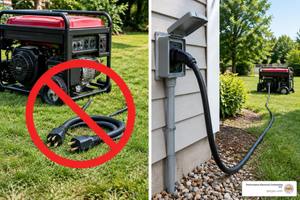
Bypassing code-approved transfer equipment by plugging a generator into a regular wall outlet or a 240-volt dryer outlet using a double-male cord—commonly known as a “suicide cord”—is illegal, reckless, and life-threatening.
When you backfeed power into your panel without an open main disconnect, generator electricity travels backward through your service entrance and enters the utility distribution transformer. The transformer steps that 240-volt current right back up to 7,200+ volts on the utility grid.
Utility lineworkers working on downed lines they believe to be de-energized can be electrocuted instantly. OSHA and NIOSH have documented fatal injuries caused by residential generator backfeed. In response to this hazard, the CPSC secured formal delisting commitments from major retailers to ban double-male cords entirely, noting they possess zero legitimate household uses.
Step-by-Step Electrical Installation and Code Compliance
Installing an inlet box and interlock kit involves working directly inside your main electrical service panel. Because live utility feeder lugs remain energized even when the main breaker is flipped off, this installation should be performed by a qualified electrician in accordance with the complete guide to electrical safety code requirements.
- Mounting the Inlet Box: Secure the NEMA 3R power inlet on an exterior wall at least 20 feet from indoor living spaces and at least 5 feet from any operable window or door.
- Conduit and Conductor Routing: Drill a penetration through the exterior wall, install sealed conduit, and pull four color-coded conductors (two hots, one neutral, one ground) directly into the electrical panel.
- Installing the Dedicated Breaker: Relocate existing branch circuits if necessary to clear the top slots directly adjacent to the main service breaker, then snap in the dedicated double-pole generator backfeed breaker.
- Securing the Mechanical Interlock: Fasten the panel-matched, UL-listed interlock sliding plate to the dead-front panel cover, verifying that the mechanical slide smoothly prevents both the main breaker and the generator breaker from being in the “ON” position simultaneously.
Floating Neutral vs Bonded Neutral Configurations
One of the most common technical issues when connecting a portable generator or power station involves neutral bonding.
- Bonded Neutral Generators: The generator’s neutral wire is connected directly to its metal frame. When connected to a standard home panel (which already has a main bonding jumper tying neutral to ground), this creates two separate neutral-ground bonds. This parallel path can cause GFCI breakers to trip repeatedly and allows stray current to travel on ground conductors.
- Floating Neutral Generators: The neutral conductor is isolated from the generator chassis. This configuration is necessary when feeding a standard residential electrical panel with a solid neutral bar.
For a comprehensive look at how portable battery stations interact with residential systems, review this guide on managing neutral bonding for power stations and generators. If your generator has a bonded neutral and you are using a standard interlock kit, code requires removing the generator’s internal bonding jumper (converting it to a floating neutral) or installing a 3-pole transfer switch that switches the neutral conductor.
Permitting, Electrical Inspections, and Total Project Costs
Modifying a service panel requires pulling an electrical permit from your local Authority Having Jurisdiction (AHJ). Skipping the permit process risks hefty municipal fines, insurance claim denials if a fire occurs, and significant delays when selling your home. Our team routinely assists homeowners with navigating inspection rules and permits to guarantee safe, certified installations.
Understanding local standards is essential to avoid Florida electrical code compliance issues such as unlisted generic interlock plates or improper conduit sealing.
In terms of budgeting, a complete interlock kit and 30A/50A inlet installation typically ranges from $450 to $900 total ($200–$450 for hardware and 2–4 hours of labor). A dedicated multi-circuit manual transfer switch runs $900 to $1,900 installed, while whole-home standby systems with automatic transfer switches (ATS) range from $8,500 to $20,000+.
Outage Operating Procedures: Safe Startup and Shutdown Protocols
When severe storms strike, having a clear operational checklist prevents dangerous mistakes. Maintain solid hurricane season electrical preparedness by keeping a laminated copy of these protocols taped inside your electrical panel door.
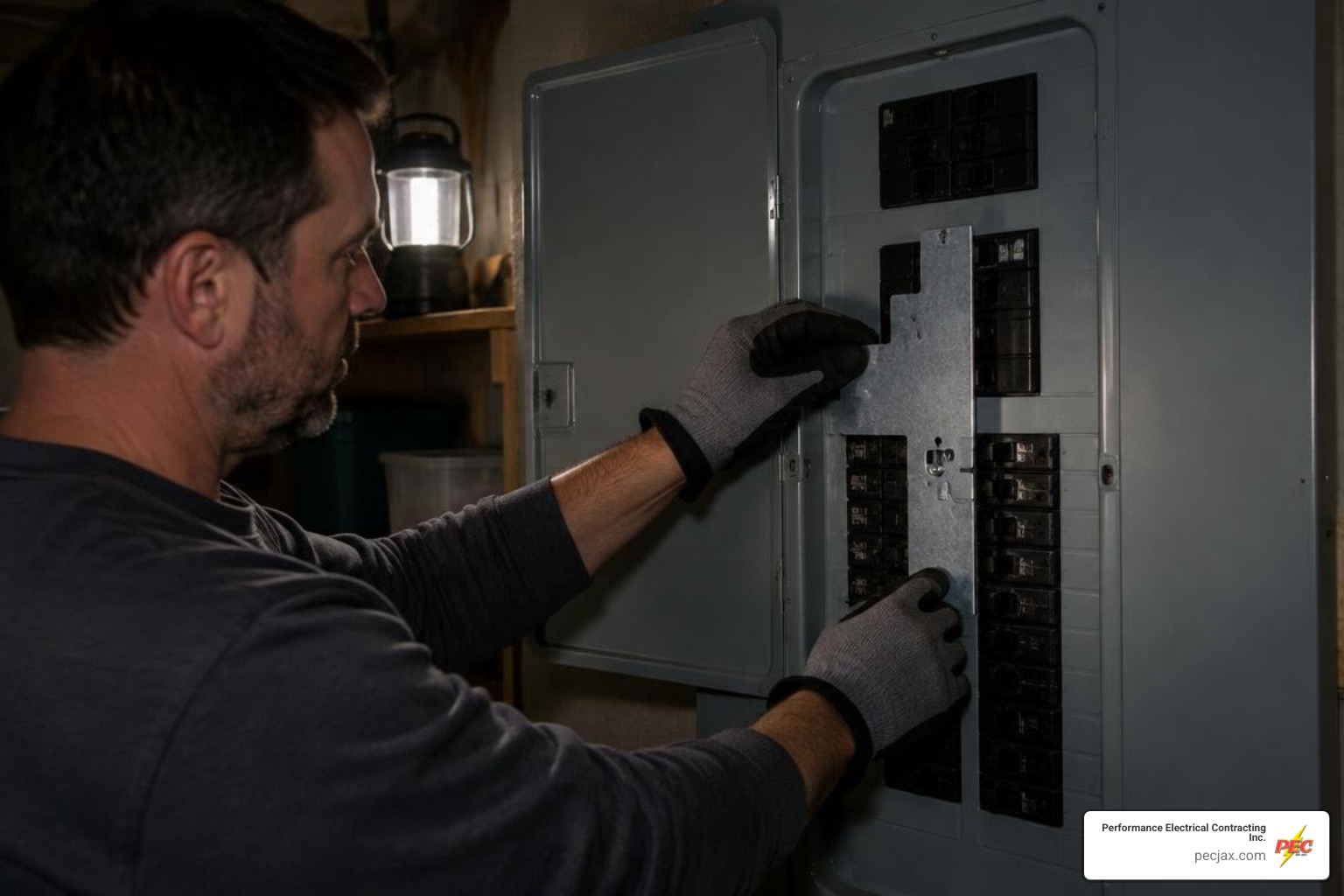
When utility power is restored, reverse the process: shut off the generator breaker in your panel, shut off the generator engine, slide the interlock plate back, turn ON your main utility breaker, and systematically restore power to your branch circuits. Always let the generator engine cool for at least two minutes before refueling to prevent spilled fuel from igniting on hot exhaust components.
Frequently Asked Questions About Connecting a Portable Generator
Do I Need a Permit to Connect a Portable Generator to Your House?
Yes. Any permanent modification to your home’s electrical service panel—including installing an interlock kit, a backfeed breaker, or an exterior power inlet box—requires an electrical permit and a certified inspection from your municipal building department to ensure full compliance with NEC Article 702.
Can I connect a portable generator to my house without a transfer switch?
Yes, but only by using a code-compliant, UL-listed mechanical panel interlock kit paired with an outdoor power inlet box, or by running heavy-duty extension cords directly from the generator to individual appliances. Bypassing these methods with a suicide cord or backfeeding an outlet is illegal and dangerous.
What appliances should not be powered directly by a portable generator?
Standard conventional portable generators can produce high Total Harmonic Distortion (THD), often exceeding 10% to 20%. Sensitive electronics—including smart televisions, high-efficiency variable-speed HVAC compressors, modern computer systems, and microprocessor-controlled washing machines—should only be powered by clean inverter generators (which maintain THD under 3%) or through dedicated surge suppression and battery backup systems.
Conclusion
Preparing your home for unexpected blackouts requires balancing convenience, reliable equipment, and strict electrical safety. By installing a listed inlet box and mechanical interlock plate, you gain the flexibility to power critical lighting, refrigeration, water systems, and medical devices without putting utility workers or your household at risk.
At Performance Electrical Contracting Inc., we deliver prompt, code-compliant, and fully permitted backup power installations throughout Jacksonville, FL, and across the Southeast. Protect your property before the next storm rolls in by scheduling our professional residential electrical services today.