
Power Sizing, Fuel Options, and Capacity Planning
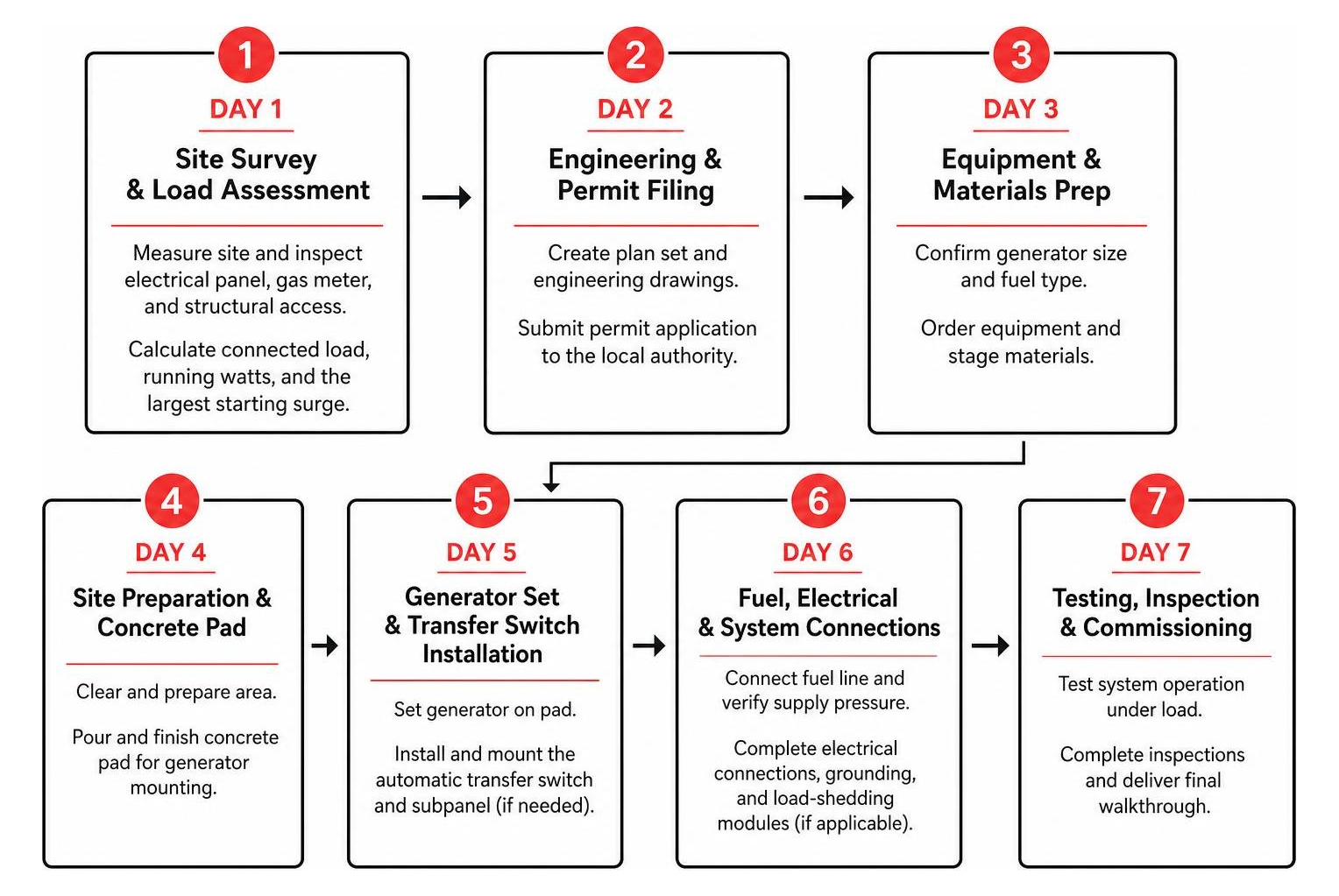
A standby generator functions as an independent, automated power plant dedicated to your property. When utility lines go dark, an integrated system senses the drop in voltage, starts the generator engine, and shifts your building’s electrical demand over to backup power within seconds. A complete generator installation can be executed in a structured 7-day workflow: Days 1–3 cover site assessment, load calculations, gas capacity verification, and permit acquisition; Days 4–5 cover foundation pad preparation, automatic transfer switch mounting, and gas line plumbing; and Days 6–7 cover generator placement, electrical and control terminations, fuel leak testing, and full system commissioning with a simulated outage. Choosing the right setup requires a deep dive into electrical demand, continuous running wattage, starting surge capacity, and utility infrastructure.
Executing comprehensive electrical capacity planning ensures your system handles heavy mechanical loads without stalling the generator or dropping voltage to sensitive electronics.
Sizing Methodology and Essential Circuit Selection
Sizing a standby generator is not simply about matching the square footage of a building; it is about calculating total connected electrical load and starting current. Electrical loads fall into two primary categories:
- Running Watts (Continuous Load): The steady electrical power required to keep an appliance running once operational (e.g., lighting, refrigeration, basic electronics).
- Surge Watts (Starting Amperage): The momentary burst of peak power needed by motor-driven equipment—such as central air conditioners, heat pumps, well pumps, and sump pumps—to start up. Starting watts can be two to four times higher than running watts.
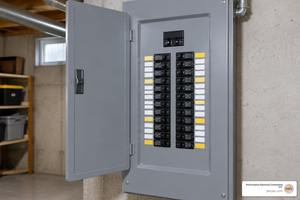
When evaluating your property, you can opt for essential circuit coverage (protecting targeted breakers via a dedicated subpanel) or whole-property managed coverage (powering the entire main distribution panel using smart load-shedding modules). Sizing calculations must account for at least 80% to 100% of your continuous operating load plus the single largest motor starting surge.
Proactive load calculations are a vital part of complete hurricane season electrical preparations, guaranteeing that vital refrigeration, medical equipment, and HVAC compressors remain fully operational when regional grids collapse.
Fuel Source Comparison: Natural Gas, Propane, and Diesel
Selecting the right fuel infrastructure dictates runtime limits, maintenance intervals, and site layout requirements. Whole-house standby units operate primarily on natural gas (NG) or liquid propane (LP), while larger commercial and industrial systems often utilize dedicated diesel configurations.
| Fuel Type | Supply Reliability | Storage Requirements | Energy Density & Output | Best Use Case |
|---|---|---|---|---|
| Natural Gas (NG) | Continuous utility delivery; no on-site refueling required | None on-site; requires adequate meter sizing and line pressure | Moderate (BTU slightly lower than LP; derates kW output by ~10-15%) | Suburban properties with established, reliable gas utility lines |
| Liquid Propane (LP) | Independent on-site storage; immune to utility disruptions | Dedicated 250- to 1,000-gallon above-ground or underground tank | High energy density; delivers full rated engine kilowatt capacity | Rural or coastal properties lacking municipal gas infrastructure |
| Diesel | High availability via fuel delivery services | On-base or external containment sub-base tanks | Maximum torque and energy density; fuel degrades over 12–24 months | Commercial properties, critical infrastructure, heavy duty |
Proper fuel plumbing is critical. Natural gas meters often require a utility pressure check or meter upgrade to guarantee sufficient water column (WC) pressure (typically 3.5 to 7 inches WC for low-pressure systems) when the generator starts under full electrical load.
The 7-Day Timeline for Standby Generator Installation

Executing a rapid, code-compliant turnkey installation requires synchronized project management. While administrative timelines such as municipal permitting vary across jurisdictions, an organized 7-day workflow outlines how our field crews sequence engineering, structural groundwork, utility connections, and commissioning.
Pre-Installation Planning, Permitting, and Sizing (Days 1–3)
The project begins with engineering assessments and administrative filings. During this initial stage:
- Site Survey: Technicians measure distances from the electrical meter, main distribution panel, gas meter, property lines, and structural openings.
- Gas Capacity Verification: We test the supply pressure and calculate total pipe length to determine the exact diameter needed to prevent fuel starvation.
- Permit Acquisition: Mechanical and electrical permit applications are submitted to the local building department along with load calculations and site layout diagrams.
- HOA & Zoning Clearances: Setback verifications ensure the chosen location satisfies neighborhood association rules and municipal noise ordinances.
Leveraging structured pre-construction electrical planning early eliminates unexpected utility delays and keeps every milestone on schedule.
Foundation Pad, Electrical Wiring, and Gas Plumbing (Days 4–5)
With site approvals secured, physical infrastructure work begins:
- Base Preparation: A flat, well-drained foundation is prepared using compacted pea gravel or a poured 3- to 4-inch steel-reinforced concrete slab capable of bearing units weighing 400 to 600+ pounds.
- Automatic Transfer Switch (ATS) Installation: The ATS is mounted adjacent to the main service panel or meter base. Our licensed electricians reroute main service feeders through the ATS to enable seamless utility-to-generator switching.
- Gas Line Plumbing: Certified mechanical technicians run black iron or approved flexible poly gas piping from the fuel source to the installation site, integrating emergency manual shutoff valves, sediment traps, and secondary regulators.
All electrical runs and control wiring are routed through protective conduit in accordance with professional residential electrical services standards.
Step-by-Step System Commissioning and Generator Installation (Days 6–7)
The final days center on setting the unit, terminating connections, and conducting strict functional testing:
- Mechanical Placement: The standby generator is rigged into place on the mounting pad and anchored securely against high-wind load requirements.
- Electrical & Control Termination: Power conductors, neutral, ground, and 12V DC control wiring are landed on the generator terminal strips and matched to the ATS logic board.
- Fuel System Leak Testing: Gas lines are pressurized, purged, and checked for micro-leaks using manometers and electronic sniffers before opening supply valves.
- Commissioning & Simulated Outage: Technicians initialize a cold smart start, verify operating frequency (60 Hz) and line voltage (120/240V), and initiate a full simulated grid outage under electrical load in strict compliance with industry installation guidelines.
- Final Inspection: Municipal building and electrical inspectors conduct their on-site walk-through to grant official sign-off.
Safety Protocols, Building Codes, and Clearances
Standby generators combine high-voltage electricity, pressurized combustible fuels, and internal combustion exhaust containing lethal carbon monoxide (CO). Rigorous compliance with National Electrical Code (NEC/NFPA 70), stationary engine standards (NFPA 37), and national fuel gas codes (NFPA 54) is required.
Our comprehensive electrical safety solutions protect your occupants, your property, and utility lineworkers from preventable operational hazards.
Minimum Clearance and Safety Standards for Generator Installation
To ensure proper cooling airflow, accessibility for maintenance technicians, and fire separation, strict physical setbacks must be observed during every generator installation:
- Distance from Structures: Units must typically maintain a minimum clearance of 18 inches from the rear of the enclosure to non-combustible exterior walls (subject to manufacturer test listings). Combustible walls or overhangs demand expanded setbacks.
- Window and Vent Separation: The generator exhaust must discharge at least 5 feet (60 inches) away from any operable window, door, dryer vent, or fresh air intake to prevent exhaust migration into indoor living areas.
- Working Space: Maintain at least 36 inches of clear, unobstructed space on all sides and the front of the enclosure for service technicians, with 60 inches of vertical overhead clearance from soffits or rooflines.
Always verify your specific property dimensions against the manufacturer clearance and safety specifications before pouring foundation pads.
Electrical Grounding and Carbon Monoxide Prevention
Safe operation requires complete physical and electrical isolation from the commercial power grid:
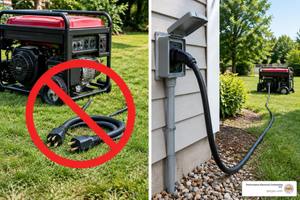
- Backfeed Prevention: Operating a generator connected to a building without an open-transition transfer switch or mechanically interlocked breaker causes hazardous electrical backfeed into neighborhood utility lines, creating lethal shock conditions for utility repair crews.
- System Grounding: Generators must be grounded per NEC Article 250 using dedicated copper grounding electrode conductors bonded to the building’s grounding electrode system or driven ground rods to dissipate fault currents.
- Carbon Monoxide Mitigation: Standby generators must never be installed indoors, within garages, under enclosed decks, or beneath breezeways. Battery-backed, interconnected UL-listed carbon monoxide alarms must be installed on every floor of the residence.
Total Investment, Maintenance Schedules, and Long-Term Value
Investing in an automatic standby power system protects property, prevents frozen or burst pipes, and eliminates the thousands of dollars lost to spoiled inventory or damaged building mechanics during extended outages.
Weather-related disruptions accounted for approximately 80% of major U.S. power outages over the past two decades, with outage frequencies nearly doubling over the last ten years. As grid instability increases, standby power systems deliver immense long-term value and strong property equity returns.
Equipment and Labor Cost Breakdown
Total project costs reflect equipment output, site complexity, and the extent of electrical work:
- Equipment Costs ($3,000 – $10,000+): Encompasses the generator unit (typically ranging from 10 kW to 26 kW for residential setups) and the automatic transfer switch.
- Labor & Installation ($5,000 – $12,000): Covers trenching, electrical conduit runs, subpanel installation, fuel line plumbing, concrete pad installation, and permitting fees.
- Total Turnkey Cost Range: Most complete residential installations fall between $8,000 and $22,000+ (with standard home packages averaging $8,000 to $16,000). Many installations can be financed for as low as $109 per month.
Ongoing Maintenance and Testing Routine
A standby generator engine requires systematic maintenance similar to an automobile. With proper care, modern air-cooled and liquid-cooled units deliver a reliable lifespan of 15 to 25 years.
- Weekly Exercise Cycle: The unit automatically runs a 5- to 12-minute low-RPM self-test to circulate engine oil, lubricate internal seals, and maintain battery charge.
- Annual / 100-Hour Service: Replace engine oil, synthetic oil filters, spark plugs, and air filter elements; test fuel delivery pressures; inspect battery electrolyte and terminal connections; and clean cooling vents.
- Post-Outage Service: Following 48 to 72 hours of continuous emergency operation, shut down the unit briefly to check oil levels, top off lubricants, and clear away debris.
Frequently Asked Questions About Home Generators
How long does a whole home generator last?
Under professional maintenance routines, high-quality standby generators typically deliver a service lifespan of 15 to 25 years. Engine longevity is measured in cumulative run hours; standard residential engines are built to operate reliably for 1,500 to 3,000+ total hours of emergency electrical generation.
Can I install a whole home standby generator myself?
No. Standby generator installation is not a DIY task. It requires high-voltage electrical work inside the main service panel, fuel gas engineering, structural site preparation, and municipal inspections. Improper wiring risks structural fires and electrocution, while faulty gas connections create explosion hazards. Furthermore, self-installation without trade licensing frequently voids manufacturer warranties and violates local building codes.
How does an automatic transfer switch work during an outage?
The Automatic Transfer Switch (ATS) acts as the central brain of your emergency power system:
- Grid Monitoring: The ATS constantly samples utility voltage.
- Outage Detection: When utility voltage drops below an acceptable threshold (typically under 80% of normal line voltage), the switch signals the generator engine to start.
- Load Transfer: Once the generator stabilizes at correct operating voltage and frequency (usually within 10 to 20 seconds), the ATS mechanically disconnects the building from the utility grid and reconnects it to the generator.
- Utility Restoration & Cooldown: When commercial power stabilizes for several consecutive minutes, the ATS reverses the connection back to the grid, allows the generator to run an un-loaded engine cool-down cycle, and returns to standby mode.
Protect Your Property with Engineered Backup Power
When severe weather and regional grid vulnerabilities threaten your everyday operations, an engineered standby generator ensures total continuity and peace of mind. As a licensed electrical contractor serving Jacksonville, FL, and the Southeast, Performance Electrical Contracting Inc. delivers turnkey standby power systems tailored precisely to your property’s electrical architecture.
Explore our comprehensive electrical and backup power services to schedule an on-site load evaluation, capacity analysis, and professional system design today.