
Comprehensive Services Offered by Electrical Service Contractors
Finding reliable electrical service contractors requires verifying four essential criteria: active Master Electrician licensing and general liability insurance, adherence to strict safety standards, proven regional project experience, and clear, itemized bidding. Ensuring your contractor possesses the technical capabilities and diagnostic expertise for your specific facility type prevents project delays, code violations, and hazardous downtime.
Electrical work is never one-size-fits-all. A single-family residence, a boutique hotel, and a heavy manufacturing plant operate under entirely different electrical loads, safety mandates, and technical complexities. When evaluating contractors, it helps to understand the full spectrum of their capabilities across various sectors.
At the core, professional electrical contractors handle three primary project tiers:
- Residential Services: Focused on single-family homes and multi-unit living spaces. Work includes dedicated branch circuits, home service panel replacements, interior and exterior lighting design, architectural fixture installation, and whole-home safety inspections.
- Commercial Installations: Tailored for offices, retail centers, restaurants, and hospitality venues. Key tasks involve commercial electrical installation, multi-phase utility service connections, tenant build-outs, and energy-efficient lighting controls.
- Industrial and Automation Solutions: Built for plants, warehouses, and fabrication facilities. This level encompasses heavy equipment connections, motor control centers (MCCs), programmable logic controllers (PLCs), high-voltage distribution, and structured low voltage cabling for enterprise-grade data networks.
| Sector | Primary Load Requirements | Core Systems & Equipment | Permitting & Code Focus |
|---|---|---|---|
| Residential | 120V / 240V single-phase power | Branch circuits, service panels, EV wall chargers, GFCI/AFCI outlets | National Electrical Code (NEC) residential chapters, local municipal codes |
| Commercial | 120V / 208V & 277V / 480V three-phase | Lighting grids, life-safety systems, dedicated HVAC circuits, subpanels | Commercial NEC, ADA compliance, life-safety standards, commercial energy codes |
| Industrial | 480V+ three-phase, medium voltage | Motor control centers, automation systems, heavy machinery, switchgear | NFPA 70E (arc flash), OSHA electrical mandates, industrial environmental controls |
Specialized Solutions from Commercial Electrical Service Contractors
Beyond standard power distribution, commercial environments demand tailored electrical engineering. For example, hospitality electrical services require seamless balancing: delivering high-end aesthetic lighting and guest comfort while maintaining robust commercial kitchen feeds, backup life-safety systems, and energy management platforms that keep utility bills predictable.
On a larger scale, partnering with seasoned infrastructure electrical contractors is essential for heavy civil, municipal, and transportation networks. These complex environments require:
- Three-Phase Power Distribution: Balancing massive electrical draws across multiple active lines to power chillers, industrial pumps, and extensive HVAC configurations.
- Life-Safety & Emergency Egress Systems: Integrating emergency backup lighting, fire alarm control panels, and stairwell pressurization fans to ensure rapid, fail-safe operation during emergencies.
- Arc Flash Studies & NFPA 70E Compliance: Performing engineering calculations to quantify potential thermal energy release, establish safe boundary distances, and label switchgear to protect on-site personnel from hazardous arc flash events.
Modern Capabilities of Smart Electrical Service Contractors
As electrical systems integrate deeper with modern technology, contractors must combine traditional craftsmanship with digital workflows.
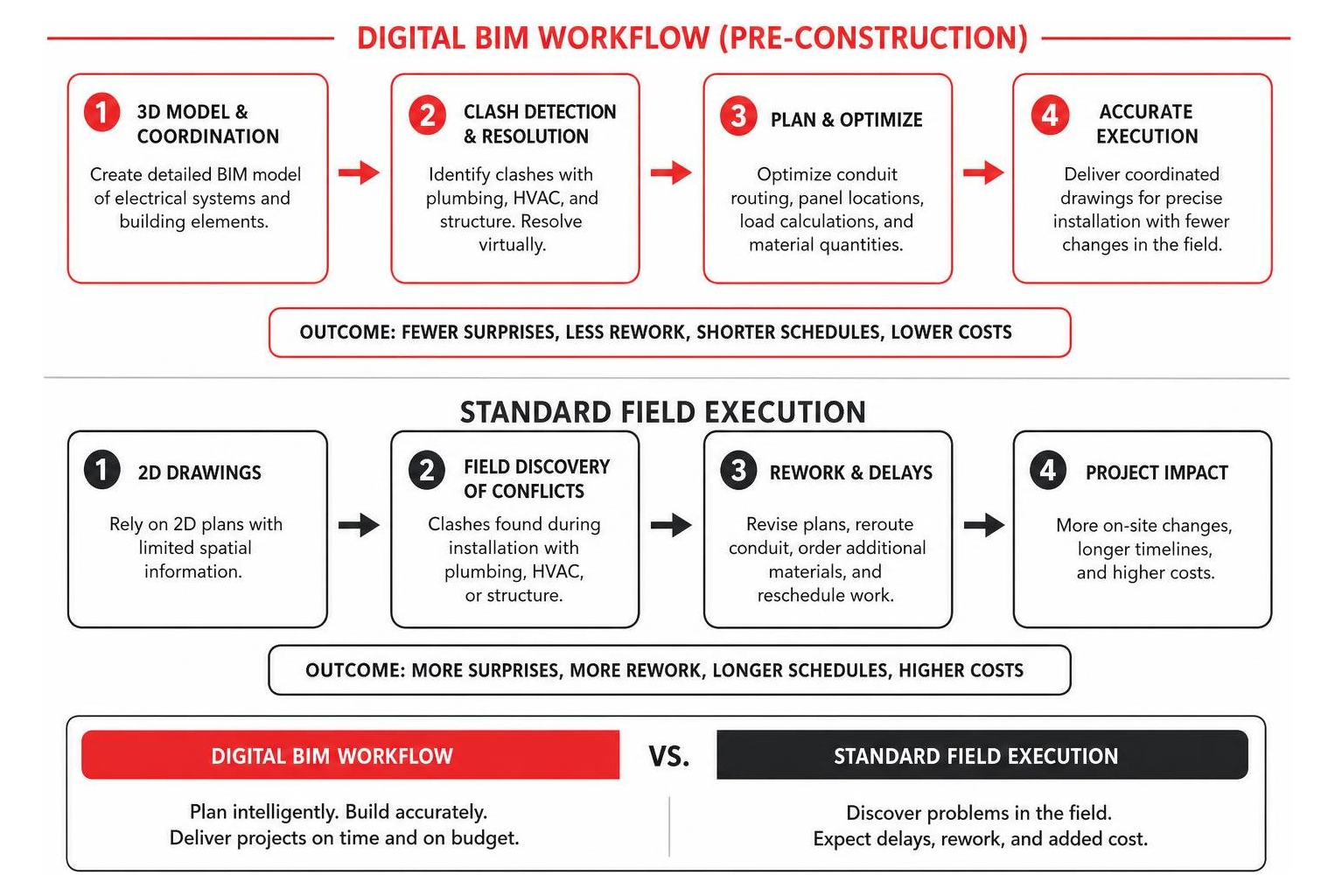
Leading electrical teams use advanced pre-construction workflows, such as:
- BIM (Building Information Modeling) & VDC (Virtual Design and Construction): Creating detailed 3D spatial models to identify conduit clashes with plumbing and HVAC ducts before boots hit the ground, eliminating costly field rework.
- Electric Vehicle (EV) Infrastructure: Calculating main service capacity, installing multi-vehicle Level 2 and Level 3 DC fast-charging stations, and configuring dynamic load management systems to prevent grid overloads.
- Renewable Solar Integration: Connecting commercial-scale photovoltaic (PV) arrays, commercial battery energy storage systems (BESS), and bidirectional metering equipment to support sustainability goals.
- Standby Generator Systems: Sizing and installing automatic transfer switches (ATS) paired with heavy-duty commercial generators to provide uninterruptible power during grid outages.
Essential Vetting Standards: Licensing, Safety, and Regional Expertise
Hiring an electrical contractor without verifying their professional credentials is a major liability. Electricity is unforgiving; errors lead directly to structural fires, equipment failure, and safety hazards.
When evaluating prospective teams, confirm that they possess:
- Master Electrician Licensure: Guarantees that project managers have thousands of verified hours managing complex electrical systems and possess deep, tested mastery of the NEC.
- General Liability & Workers’ Compensation: Protects your property from accidental damage and covers technicians in the event of an on-site injury. Never accept a contractor without an active Certificate of Insurance (COI) sent directly from their carrier.
- Strict OSHA & NFPA Safety Protocols: Verified safety policies ensure crews wear appropriate Personal Protective Equipment (PPE) and maintain clean, zero-incident jobsites.
- Code Compliance & Permitting Mastery: Proper documentation protects your property’s value. Following electrical code compliance and permits ensures all work passes municipal inspections on the first visit.
Regional expertise is just as crucial. Coastal and southern climates present unique challenges, such as extreme humidity, lightning strikes, and severe storm surges. A regional contractor designs installations using corrosion-resistant NEMA-rated enclosures, comprehensive grounding rods, and multi-stage surge suppression to withstand localized weather conditions.
Assessing Track Record, Testimonials, and Local Reputation
Online reviews provide valuable insight into how a contractor handles real-world challenges. When reviewing feedback, look for patterns in communication, cleanliness, adherence to schedules, and pricing transparency.
When seeking the top electrical companies in Jacksonville or throughout the Southeast, prioritize established local contractors with strong regional roots over out-of-state brokers. Local contractors maintain active working relationships with regional building inspectors, understand local utility procedures, and stand behind their workmanship for years to come.
Navigating the Hiring Process, Diagnostics, and Transparent Estimates
Engaging a professional contractor should follow a structured, predictable path from your initial inquiry to final sign-off:
- Initial Consultation & Scope Review: Discussing your property type, load requirements, timelines, and project objectives.
- On-Site Diagnostic Assessment: A certified technician evaluates physical panel capacity, wiring health, grounding connections, and conduit runs.
- Detailed Engineering & Planning: Developing load calculations, single-line diagrams, and permit applications.
- Itemized Proposal Presentation: Reviewing a clear proposal that separates labor, materials, permitting fees, and equipment costs.
- Execution & Permitted Inspection: Performing the work cleanly, coordinating utility power shutdowns, and scheduling municipal final inspections.
Essential Questions to Ask Before Signing a Contract
- Are all technicians working on my property licensed journeymen or directly supervised apprentices?
- Will you handle all municipal permit filings and coordinate the final inspection?
- How do you handle unforeseen structural obstacles or scope changes during construction?
- What specific manufacturer and labor warranties cover this installation?
- Can you provide recent references from comparable local projects?
Preventing Cost Surprises and Managing Ongoing Upkeep
Hidden costs typically stem from vague initial scopes or unexpected site conditions. Professional contractors prevent pricing surprises by establishing clear change order protocols: any additional work or discovered code violations must be diagnosed, quoted in writing, and signed off before work proceeds.
Proactive long-term maintenance helps avoid emergency repair bills altogether. Enrolling your facility in a structured electrical maintenance technical program provides scheduled thermal imaging scans, switchgear cleaning, torque testing, and proactive panel load monitoring. Regular maintenance identifies hot spots and degrading breakers long before they cause unexpected power outages.
Handling Urgent Repairs and 24/7 Emergency Electrical Services
Electrical emergencies rarely happen during convenient business hours. When main breakers trip, distribution panels buzz, or water intrudes into electrical risers, immediate professional intervention is necessary to prevent property damage and ensure occupant safety.
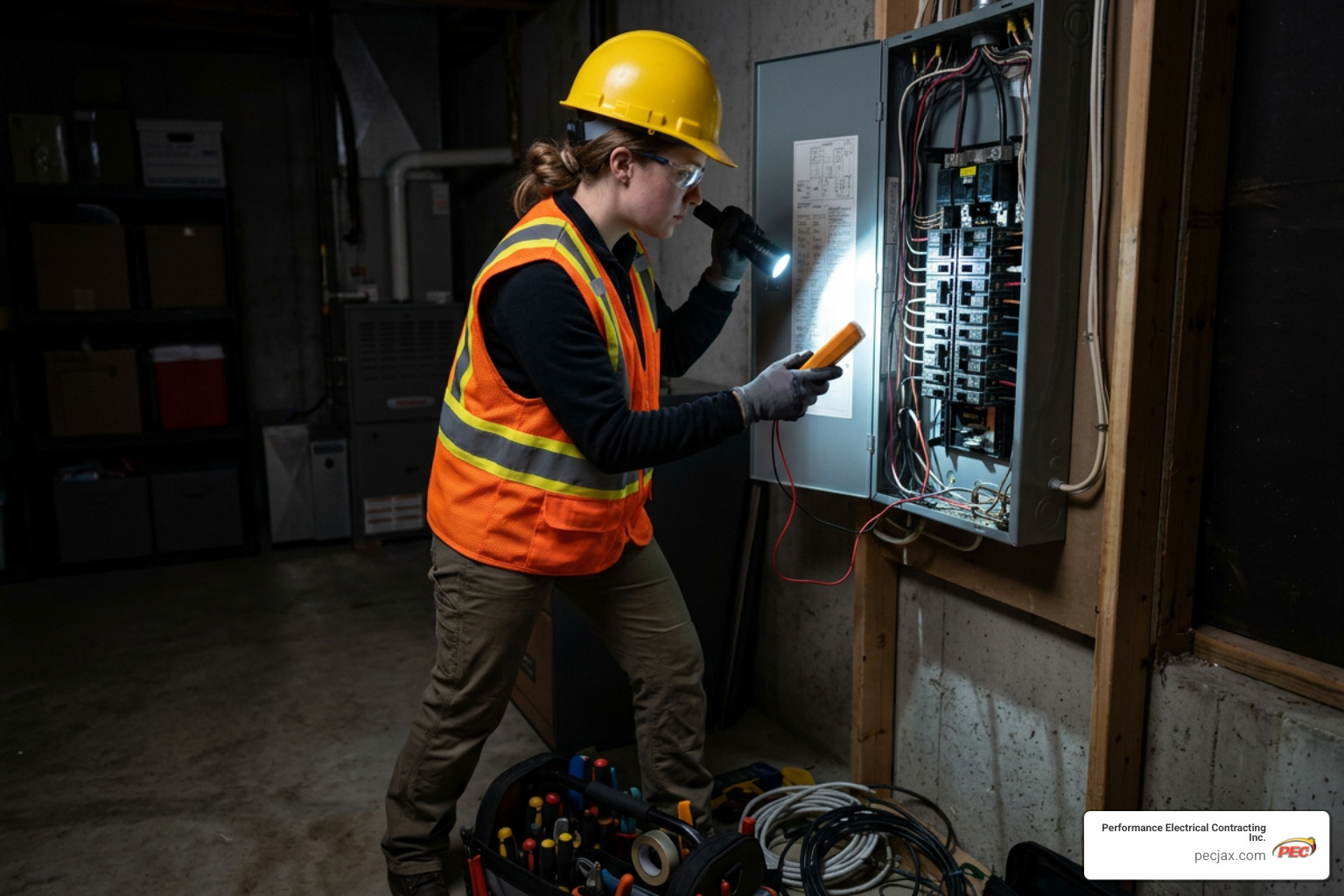
Top electrical contractors maintain dedicated emergency teams to handle:
- Sudden Power Loss: Diagnosing utility supply issues, failed main lugs, or blown transformer fuses.
- Dangerous Arcing and Scorched Panels: Safely isolating burning circuits, replacing compromised busbars, and eliminating fire hazards.
- Storm and Lightning Damage: Evaluating secondary distribution networks, repairing severed service drops, and testing backup power transitions.
- Cascading Ground Faults: Rapidly tracing short circuits in wet or damaged conduit to restore critical circuits safely.
Contractors equipped for emergencies prioritize swift containment, transparent triage updates, and code-compliant repairs to get your facility back online safely.
Frequently Asked Questions About Electrical Contractors
How do I verify if an electrical contractor is properly licensed and insured?
You can verify licensing by visiting your state’s Department of Business and Professional Regulation (DBPR) or local licensing board website. Search the contractor’s legal business name or license number to confirm their status is active and free of unresolved disciplinary actions. To verify insurance, request a Certificate of Insurance (COI) that lists your company as a certificate holder, confirming active general liability and workers’ compensation policies.
When should a building owner schedule a panel upgrade over a repair?
A full service panel upgrade is recommended when:
- The existing electrical panel is more than 25 to 30 years old.
- The panel uses obsolete or recalled components.
- Breakers trip frequently because current power draw exceeds panel amperage capacity.
- You are adding heavy electrical loads, such as commercial EV chargers, industrial machinery, or new HVAC systems.
- Visual inspections reveal physical corrosion, rust, or heat damage on the busbars.
What project details should clients provide to receive an accurate quote?
To get an accurate, itemized estimate with minimal revisions, provide:
- The property address and building use type (multifamily, commercial, hospitality, industrial).
- Clear photos of your current main electrical panel, subpanels, and meter base.
- Blueprints, architectural drawings, or single-line diagrams for new construction and tenant fit-outs.
- Equipment specifications for any high-draw machinery or appliances you plan to install.
- Desired completion timelines and any site-specific access constraints.
Conclusion
Choosing the right electrical partner protects your property’s infrastructure, preserves operational continuity, and keeps your project on budget. By focusing on certified licensing, regional experience, digital BIM coordination, and transparent pricing, you can approach your next electrical build or retrofit with complete confidence.
At Performance Electrical Contracting Inc., we deliver reliable, code-compliant, and value-driven electrical installations across Jacksonville, FL, and the Southeast. From complex commercial build-outs and hospitality systems to routine facility maintenance, our pre-qualified team brings dedicated craftsmanship to every job. Connect with our team today to discuss your upcoming project and secure an experienced electrical partner for your property.