Essential Hospitality Electrical Services for Modern Venues
Modern hospitality venues rely on an intricate web of specialized electrical systems. From high-capacity power distribution to warm, welcoming lighting design, every property zone requires precise planning and expert execution.
When configuring hospitality electrical services, electrical contractors evaluate four core functional zones across a property:
| Hospitality Zone | Core Electrical Demands | Key Compliance & Feature Requirements |
|---|---|---|
| Guest Rooms & Suites | High density of convenience outlets, low-voltage control, smart thermostats | Accessible USB/USB-C power, occupancy sensing, silent switches |
| Commercial Kitchens & Bars | Dedicated high-voltage circuits, sustained heat load management | Three-phase distribution, GFCI protection, ATEX/grease resistance |
| Pools, Spas & Recreation | Underwater lighting, heavy pump and heater loads | Strict equipment bonding, ground-fault circuit interrupters (GFCI) |
| Lobbies, Dining & Common Areas | Architectural accent lighting, dimming networks, AV power | DALI/DMX digital controls, emergency exit pathways |
Heavy Power Loads in Commercial Kitchens and Facilities
Commercial hospitality kitchens are electrical powerhouses that demand heavy power distribution. Kitchen equipment—such as commercial combi ovens, high-capacity fryers, induction ranges, continuous refrigeration systems, and heavy-duty extraction fans—operates under constant, high-power demand.
To manage these heavy power loads, we design robust three-phase distribution systems that balance the operational pull across all electrical phases. Sizing these systems requires strict equipment schedule coordination between kitchen equipment suppliers, facility managers, and electrical engineers before installation begins.
Failing to properly calculate transformer capacity and panel sizing often results in tripping main circuit breakers right in the middle of dinner service—a costly disaster that ruins food inventory, slows down order execution, and degrades your venue’s reputation.
Designing Hospitality Electrical Services for Ambiance and Dwell Time
In the hospitality industry, lighting is far more than a functional utility—it is a central component of the guest experience that directly influences dwell time, mood, and brand perception. A well-lit venue flatters guest appearance, sets a dining tone, and makes common spaces feel grand yet comfortable.
To achieve this, we implement atmospheric lighting designs utilizing digital control architectures such as DALI (Digital Addressable Lighting Interface) and DMX systems. These systems allow hotel operators and restaurateurs to program automated lighting transitions that subtly shift throughout the day—from crisp, vibrant morning light for breakfast service to warm, muted tones for evening cocktails.
Equally critical is modern power convenience. Today’s travelers carry multiple personal devices. Providing accessible USB-C power ports adjacent to beds, desks, and lounge seating is a non-negotiable guest expectation. Incorporating modern power conveniences ensures your property aligns with brand standards and franchise Property Improvement Plans (PIPs).
Understanding how electrical design adapts to business growth is essential for driving seamless venue transformations and long-term guest satisfaction.
Energy Efficiency and Smart Tech Upgrades That Deliver High ROI
Upgrading aging electrical systems is one of the most effective strategies hospitality managers can use to reduce overhead. Energy costs represent a significant portion of a hotel’s variable operating expenses, making energy efficiency upgrades a key driver of property profitability.
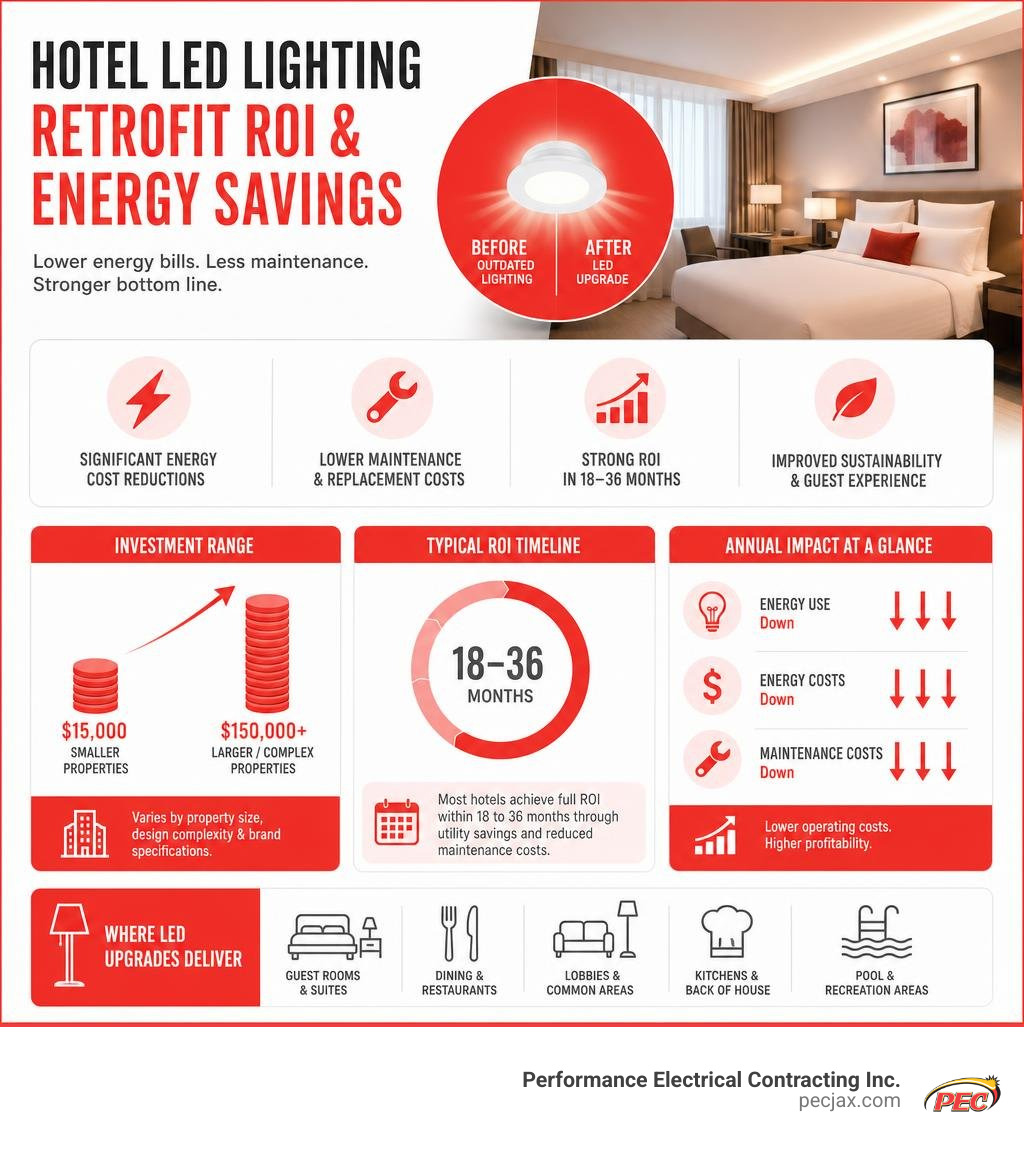
Commercial hotel LED lighting retrofits typically range from $15,000 to $150,000+ depending on property scale, design complexity, and brand specifications. While this initial investment may seem substantial, most hospitality properties see full project ROI within 18 to 36 months strictly through utility savings and reduced lamp maintenance costs.
To explore comprehensive energy-saving strategies for commercial properties, review benchmark energy management practices from ENERGY STAR.
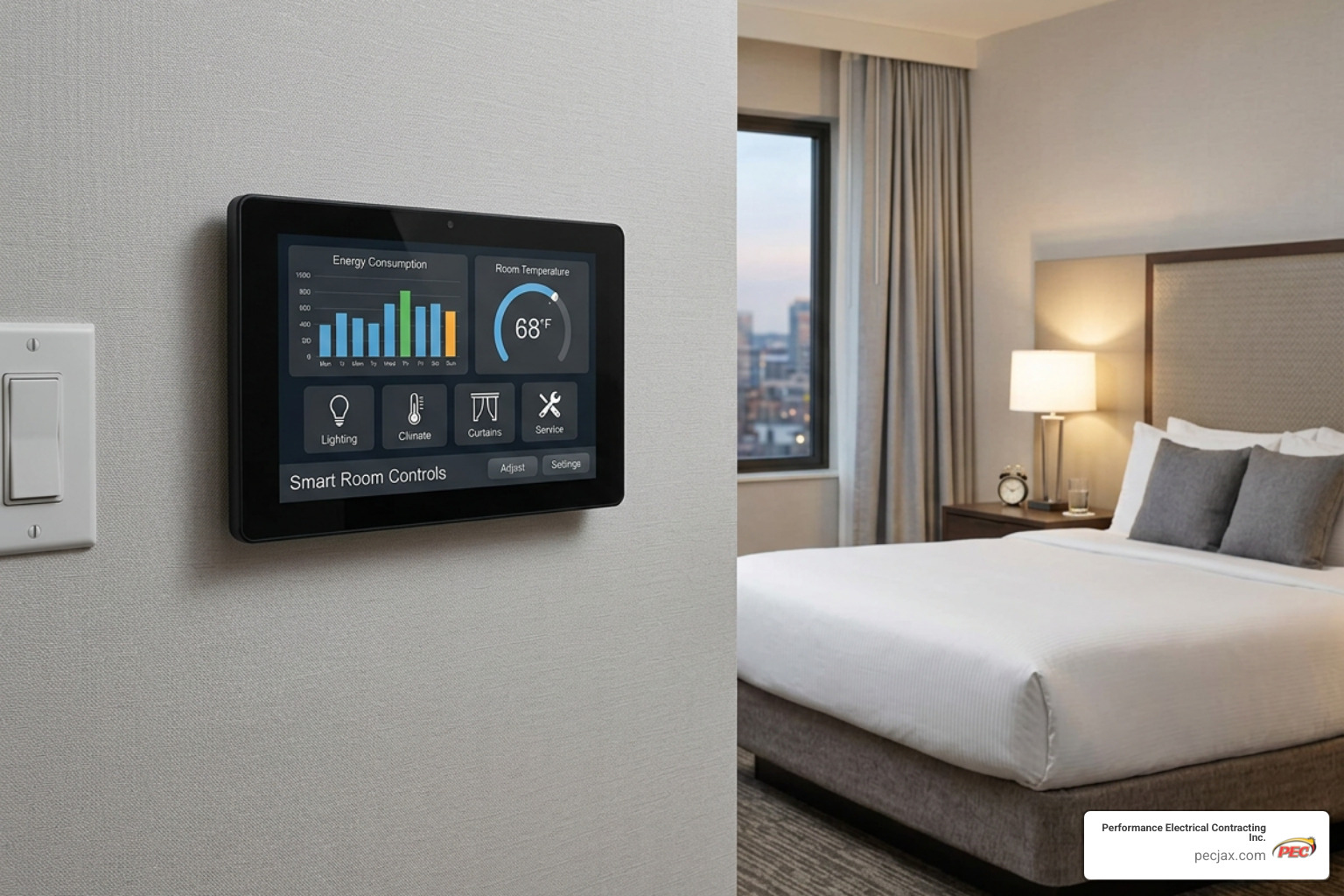
Smart Building Automation and Occupancy Sensors
Integrating smart technology takes energy management a step further. Centralized Building Automation Systems (BAS) and Guest Room Management Systems (GRMS) monitor electrical loads and automatically adjust settings based on real-time room status.
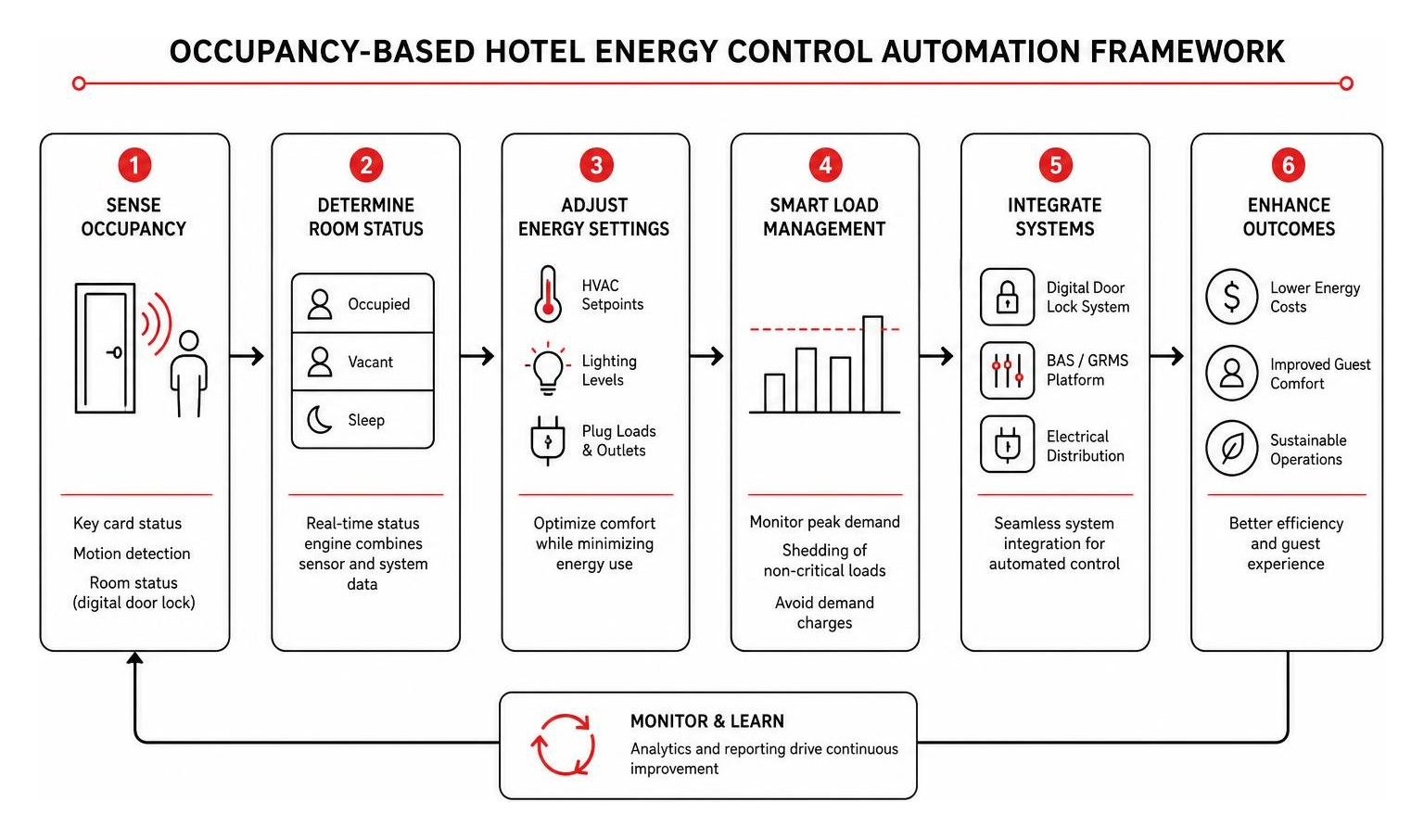
Deploying smart energy management systems and occupancy sensors can reduce overall hotel energy costs by up to 35% while simultaneously enhancing guest room comfort control:
- Occupancy Sensors: Dual-technology motion and thermal sensors detect when a guest leaves the room, automatically adjusting HVAC setpoints and shutting off non-essential lighting.
- Smart Load Control: Non-critical power loads are automatically shed during utility peak-demand hours, protecting the property from costly demand charges.
- Keyless Entry & Automation: Integrating digital door lock networks with guest room electrical circuits activates personal welcoming light scenes the moment a guest taps their room key.
Strategic EV Charging Infrastructure for Eco-Conscious Guests
As electric vehicle adoption grows, offering accessible, reliable EV charging stations has shifted from a novelty amenity to an absolute booking necessity. Eco-conscious travelers, corporate accounts, and road-trippers actively filter hotels by the availability of on-site EV charging.
Integrating EV charging into a hospitality property requires precise load calculations and infrastructure planning:
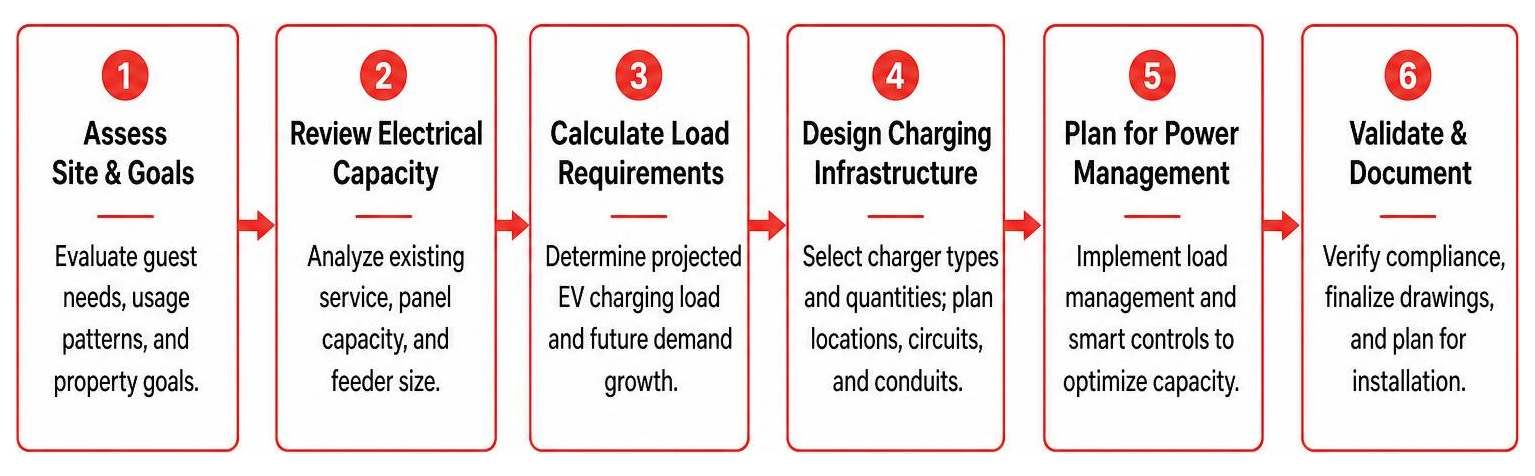
Before installing commercial Level 2 or DC Fast Chargers, property managers must evaluate the existing panel capacity and service feeder size. Reviewing The Importance of Electrical Capacity Planning for Growing Homes and Businesses explains why calculating peak utility load prevents unexpected panel overloads when multiple guests plug in their vehicles simultaneously.
Operational Continuity: Minimizing Downtime and Safeguarding Emergency Power
In the hospitality sector, an unexpected electrical outage means far more than dark rooms—it halts kitchen refrigeration, disables point-of-sale systems, shuts down elevators, compromises electronic lock security, and interrupts guest events. Protecting operational continuity requires a guest-first execution approach paired with reliable emergency backup infrastructure.

We specialize in zero-disruption execution by scheduling major installation and maintenance work around guest occupancy patterns:
- Guest Room Work: Executed in pre-planned blocks during low-occupancy windows and checked-out periods between 10:00 AM and 3:00 PM.
- Common Area Upgrades: Conducted during off-peak overnight hours when lobby and dining footprint activity is at its lowest.
- Emergency Response: Contracted clients receive priority dispatch with a target SLA response of 2 to 4 hours, ensuring sudden electrical faults are rectified before impacting the guest experience.
Safety Code Compliance and Regulatory Inspections
Commercial hospitality properties are governed by strict safety regulations, including the National Electrical Code (NEC) in North America and regional standards like BS 7671 in international jurisdictions. Compliance is legally required to ensure guest and staff safety, maintain operational licensing, and prevent catastrophic liabilities.
Key safety compliance areas for hospitality property managers include:
- Life Safety Emergency Lighting: Automated emergency backup lights and illuminated exit signage that activate instantly upon loss of utility power, fully tested per regional life safety codes.
- Wet Area GFCI Protection: Mandatory Ground-Fault Circuit Interrupter protection for all outlets within commercial kitchens, guest bathrooms, outdoor bars, and pool equipment rooms.
- ATEX/Grease-Vapor Standards: Specialist electrical enclosures and heat-rated wiring installed within kitchen exhaust hood perimeters to eliminate ignition risks.
For additional information regarding regional safety standards and compliance frameworks, consult codes established by organizations like the National Fire Protection Association.
Preventing Outages Through Scheduled Maintenance and Periodic Inspections
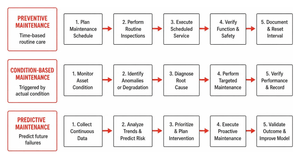
The best way to manage electrical emergencies is to prevent them entirely through Planned Preventative Maintenance (PPM). Waiting for a breaker to trip or a panel to overheat during maximum resort occupancy is a recipe for operational failure.
Scheduled maintenance programs include thermal imaging inspections, torque checks on terminal connections, transformer oil analysis, and automated generator load-bank testing.
Recognizing early failure indicators can save your business thousands of dollars in emergency service fees. Check out 5 Warning Signs Your Commercial Electrical System Needs Immediate Attention to spot early system degradation before it develops into a full-scale property outage.
How to Select the Right Electrical Contractor for Your Hospitality Portfolio
Managing electrical upgrades or maintenance across multi-property hotel portfolios demands a commercial electrical partner who understands commercial operations, franchise mandates, and strict scheduling windows.
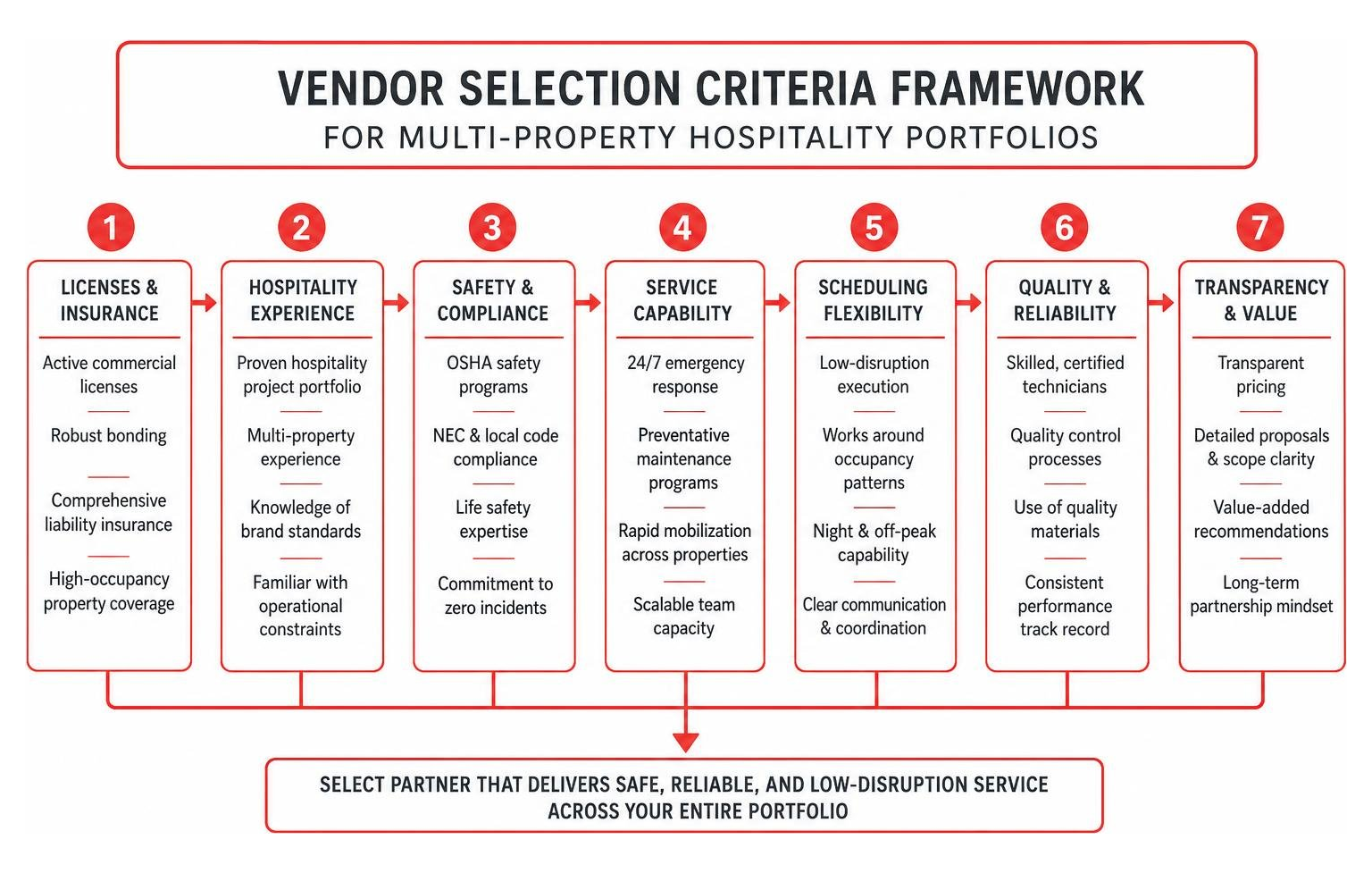
Best Practices for Hiring Hospitality Electrical Services Contractors
When vetting commercial contractors for your hospitality portfolio, prioritize these qualifications:
- Pre-Qualified Industry Credentials: Ensure the contractor holds active, master-level commercial licenses, robust bonding, and comprehensive liability insurance tailored for high-occupancy commercial properties.
- Franchise PIP Compliance: Your contractor should have extensive experience meeting corporate Property Improvement Plan (PIP) mandates, brand lighting standards, and utility rebate documentation requirements.
- Single Point of Contact: Multi-property operators benefit from a dedicated account manager who standardizes pricing, centralizes billing, and oversees project execution across all locations.
- Off-Hours Capabilities: Choose contractors with dedicated night-shift crews equipped to perform commercial kitchen rewires, lobby lighting shifts, and panel upgrades without interrupting daily guest operations.
Frequently Asked Questions About Hospitality Electrical Services
How do electrical contractors minimize guest disruption during major renovations?
Contractors utilize guest-first scheduling strategies. Noise-heavy work is performed away from occupied guest wings, guest room upgrades are executed in vacant room blocks during midday check-out hours, and core infrastructure or common-area service shifts are conducted overnight.
What is the typical ROI timeframe for a hotel LED lighting upgrade?
Most hotel LED retrofits deliver full return on investment within 18 to 36 months. ROI is driven by immediate 50% to 80% drops in lighting energy consumption, reduced air conditioning cooling loads, local utility energy rebates, and the elimination of routine lamp replacement labor.
Why is emergency power backup mandatory for commercial hospitality properties?
Emergency power is required by code to operate emergency exit lighting, life-safety alarms, fire suppression pumps, and elevator extraction systems. Additionally, backup generators protect commercial kitchen inventory from spoilage, maintain security systems, and keep point-of-sale platforms online during grid failures.
Conclusion
Partnering with an experienced electrical team ensures your property operates smoothly, efficiently, and without interruption. Investing in smart energy management, compliant safety systems, and atmospheric lighting elevates your property’s value while keeping utility costs in check.
At Performance Electrical Contracting Inc., we deliver value-driven, on-time, and on-budget solutions tailored for hotels, resorts, and commercial venues across Jacksonville, Northeast Florida, and the Southeast U.S. Whether you need a full lighting retrofit, panel expansion, or scheduled preventative maintenance, our team is ready to serve as your long-term partner.
Contact Performance Electrical Contracting for Expert Hospitality Solutions to schedule a comprehensive property consultation today.